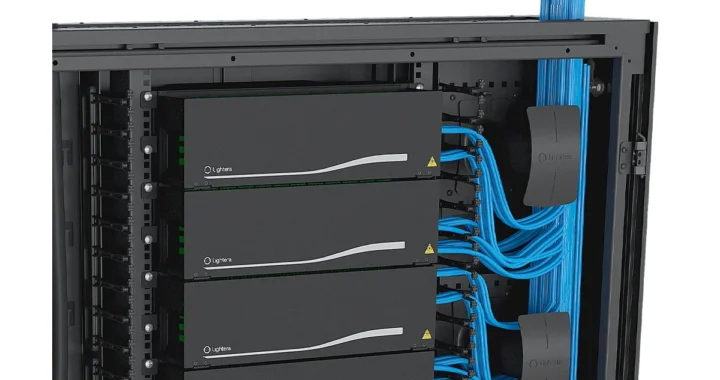








NORCROSS, Georgia — August 13, 2026 — In a move designed to address the surging bandwidth requirements of the artificial intelligence (AI) era, Lightera, a global leader in optical fiber and connectivity solutions, today announced a comprehensive, multi-region manufacturing expansion. The initiative aims to significantly scale the company’s production capacity for optical fiber and high-density cable, specifically targeting the bottlenecks currently facing hyperscale data centers, cloud providers, and next-generation telecommunications networks.
This expansion represents a pivotal shift in Lightera’s operational strategy. By leveraging manufacturing hubs across the United States, Brazil, Japan, and India, the company intends to build a resilient, globally distributed supply chain capable of meeting the aggressive deployment schedules of the world’s largest technology firms.
The Core Catalyst: Meeting the AI Infrastructure Imperative
The explosion of generative AI and large language models (LLMs) has fundamentally altered the landscape of global networking. As data centers transition toward high-performance computing (HPC) clusters, the physical infrastructure—the "pipes" of the internet—must evolve to support unprecedented data throughput.
Lightera’s decision to scale is not merely reactionary; it is driven by long-term purchase commitments from industry partners who are currently grappling with fiber shortages. As hyperscalers race to build out massive data centers to house tens of thousands of GPUs, the demand for high-performance, low-latency, and high-density optical fiber has reached an all-time high.
"Artificial intelligence is fundamentally transforming the world’s communications infrastructure and driving unprecedented requirements for fiber density, performance, and scale," said Holly Hulse, Chief Executive Officer of Lightera. "This expansion reflects our long-term commitment to growing alongside our customers by increasing manufacturing capacity, strengthening our global supply chain, and continuing to innovate the advanced optical technologies required for the next generation of AI and cloud infrastructure."
Chronology of Expansion and Implementation
Lightera’s expansion roadmap is structured to ensure a phased, stable integration of new production lines. The company has identified a multi-year window for the realization of this project, ensuring that supply meets demand in a controlled, sustainable manner.
- Q3 2026 (Announcement Phase): Lightera formally commits to the expansion, finalizing capital expenditure allocations across its four core international manufacturing sites.
- Q4 2026 – Q4 2027 (Infrastructure Development): During this period, Lightera will focus on facility upgrades, the procurement of state-of-the-art drawing towers, and the installation of high-speed cable assembly machinery.
- H1 2028 (Testing and Calibration): As new lines are completed, rigorous testing protocols will be implemented to ensure the new output maintains the high performance and reliability standards expected of Lightera’s brand.
- H2 2028 (Operational Commencement): Additional production capacity is expected to come online progressively. This phase marks the first significant wave of increased supply entering the global market.
- 2029 and Beyond (Steady State): Full production capacity is expected to be reached, providing a stabilized supply chain capable of supporting the massive infrastructure build-outs anticipated by global telecommunications providers and cloud hyperscalers.
Supporting Data: Why High-Density Connectivity Matters
The requirement for this expansion is rooted in the physical limitations of current data center designs. As fiber counts within these facilities climb into the thousands, space efficiency becomes a premium.
Rollable Ribbon Cable Technology
Central to Lightera’s strategy is its proprietary Rollable Ribbon Cable technology. Unlike traditional flat ribbons, which can be rigid and difficult to route, rollable ribbon fiber allows for a much higher density of fiber strands in a smaller cable diameter. This enables:
- Reduced Installation Times: Faster handling and easier splicing in crowded data center environments.
- Scalable Deployment: Operators can pack more bandwidth into existing conduits, delaying or eliminating the need for costly civil engineering work to expand fiber ducts.
- Improved Airflow: Smaller cable profiles contribute to better airflow management within data center floor tiles and overhead cable trays, reducing cooling energy costs.
Ecosystem Investment
Beyond raw fiber and cable, Lightera is investing heavily in the "connectivity ecosystem." This includes:
- Advanced Connector Technologies: To ensure minimal signal loss at high frequencies.
- Multicore Fiber (MCF): Designed to increase capacity per fiber strand by orders of magnitude.
- Hollow Core Fiber (HCF): Providing lower latency, a critical metric for real-time AI processing.
- Ocean Fiber: Ensuring the trans-oceanic cables that connect global data regions can handle the sheer volume of data being moved between global AI training clusters.
Official Responses and Strategic Vision
The leadership team at Lightera views this expansion as a foundational necessity for the modern digital economy. By positioning its manufacturing footprint in key regional hubs—the U.S., Brazil, Japan, and India—Lightera is creating a "geographically redundant" supply chain. This structure protects customers from regional geopolitical instability, natural disasters, or logistical bottlenecks, which have historically plagued the telecommunications supply chain.
"Our commitment is to be the backbone of the AI era," says the Lightera executive leadership. "When our customers design a next-generation hyperscale facility, they need to know that the physical layer will be ready and available, regardless of where they are building. By diversifying our manufacturing footprint, we are not just increasing capacity; we are increasing the reliability of the global internet."
Industry analysts note that this move by Lightera mirrors a broader trend among Tier-1 optical manufacturers who are shifting from a "just-in-time" supply model to a "just-in-case" model, prioritizing supply security to satisfy the massive, multi-year deployment cycles of major cloud service providers (CSPs).
Implications for the Future of Connectivity
The implications of Lightera’s expansion extend far beyond the data center. By lowering the cost of deployment and increasing the capacity of optical networks, this initiative will have a cascading effect on several key sectors:
1. Telecommunications and 5G/6G
As mobile networks transition to 6G, the requirement for fiber-to-the-antenna (FTTA) will intensify. Lightera’s increased capacity will help telcos meet the densification requirements of small-cell networks, essential for low-latency 6G communications.
2. Industrial and Generative AI
The training of AI models requires massive data sets to be ingested by GPU clusters. Lightera’s high-density connectivity ensures that these clusters can communicate at the speed required to prevent "I/O bottlenecks," where the computation speed of the GPU is wasted waiting for data to arrive.
3. Sustainability and "Green" Infrastructure
Increased capacity does not have to mean increased energy usage. Lightera’s emphasis on high-density cabling reduces the physical footprint of the network, which, when coupled with their advanced fiber types, allows for more data to be transmitted with lower signal attenuation—thereby reducing the total power consumption per gigabit transmitted.
4. Global Economic Stability
By maintaining a footprint in diverse economic zones, Lightera is effectively hedging against inflation and trade volatility. The ability to shift production or supply from different regional hubs ensures that even in times of global supply chain strain, critical infrastructure projects remain on track.
Conclusion: A Legacy of Innovation
Lightera, as a key component of the Furukawa Electric Group, continues to lean into a legacy that spans over a century of optical science and infrastructure expertise. Headquartered in Norcross, Georgia, the company has successfully pivoted from a traditional fiber provider to a holistic connectivity partner.
With this announcement, Lightera has signaled to the market that it is prepared for the next decade of digital growth. As the world becomes increasingly reliant on generative AI, cloud computing, and high-speed, low-latency connectivity, Lightera is positioning itself to be the essential partner for the infrastructure that makes this future possible.
For stakeholders, investors, and customers, the message is clear: the physical layer is no longer an afterthought. It is the core of the digital age, and Lightera is investing to ensure that this core remains robust, efficient, and ready to meet the challenges of the future.
About Lightera
Lightera is a global leader in optical fiber and connectivity solutions. Built on a legacy of expertise in optical science, we provide high-performance solutions that enable faster, more reliable, and sustainable connections for businesses, communities, and industries worldwide. With operational headquarters in Norcross, Georgia, U.S.A., Lightera serves customers across telecommunications, enterprise, industrial, generative AI, data centers, 5G/6G, utilities, medical, aerospace, defense, and sensing markets. Lightera is part of Furukawa Electric Group, a pioneer in advancing the next generation of infrastructure through integrated solutions in connectivity, information, energy, and mobility.
For more information, visit www.Lightera.com.
Media Contact:
Sherry Salyer
Lightera Communications
[email protected]