




In the modern commercial landscape, the concept of building security has evolved from simple physical barriers and reactive surveillance to sophisticated, predictive ecosystems. As threats to commercial properties become more complex, facility managers are increasingly turning to a synergy of Artificial Intelligence (AI) and high-performance networking to safeguard occupants and assets. At the heart of this transition lies Type 4 Power over Ethernet (PoE), a transformative technology that bridges the gap between legacy infrastructure and the high-bandwidth, high-power demands of next-generation security systems.
Main Facts: The Convergence of Power and Intelligence
Commercial buildings require multi-layered security protocols, encompassing everything from access control systems and motion detectors to high-definition surveillance arrays. Traditionally, deploying these systems required two separate infrastructures: data cabling for communication and electrical wiring for power. This dual-track approach is not only expensive but architecturally cumbersome.
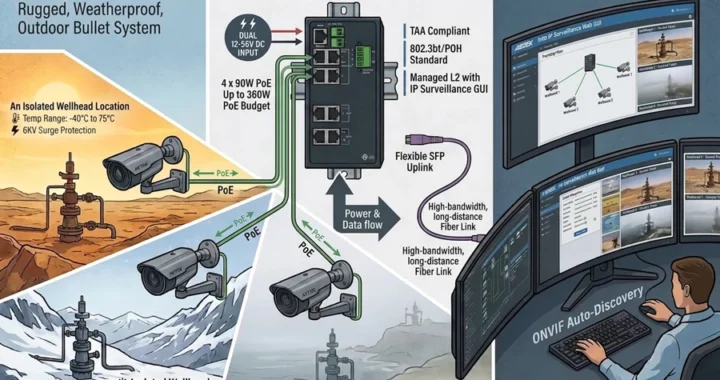
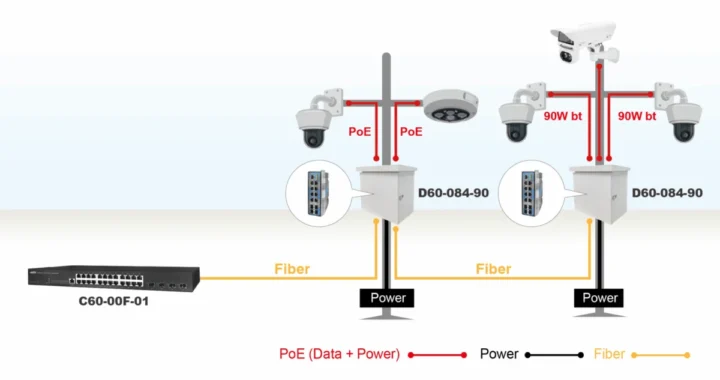
The introduction of IEEE 802.3bt—commonly referred to as Type 4 PoE—has fundamentally altered this paradigm. Capable of delivering up to 90W of power alongside high-speed data transfer over a single Category 6a Ethernet cable, Type 4 PoE eliminates the need for extensive electrical overhauls. This allows building owners to power energy-intensive, AI-driven security devices directly through the network switch. By leveraging AI at the "edge"—within the camera or sensor itself—security systems can now process gigabytes of data in real time, shifting the operational focus from recording past events to predicting and preventing breaches before they escalate.
Chronology: The Evolution of Building Security
The shift toward intelligent, PoE-driven security has been a decades-long progression, defined by milestones in both power delivery and data processing:
- The Early Era (1990s–2000s): Security was dominated by analog CCTV systems. These systems were "dumb," requiring continuous human monitoring and providing little in the way of predictive data. If a crime occurred, the footage was often low-resolution and inaccessible until after the fact.
- The Advent of PoE (2003): The IEEE 802.3af standard introduced the first formal PoE specifications, allowing for 15W of power. This enabled the rise of early IP cameras, but bandwidth was limited, and power was insufficient for advanced features like PTZ (pan-tilt-zoom) or thermal imaging.
- Expansion of Power (2009–2018): With the arrival of 802.3at (PoE+), power limits rose to 30W. This opened the door for more complex surveillance hardware, though still restricted by legacy network speeds.
- The AI Revolution (2018–Present): The ratification of the IEEE 802.3bt standard marked a turning point. Supporting up to 90W, this standard provided the necessary "fuel" for high-end AI processors, 4K resolution cameras, and sophisticated IoT sensors, effectively turning every node in a network into an intelligent, autonomous security agent.
Supporting Data: Why Type 4 PoE is the Backbone of Smart Security
To understand the necessity of Type 4 PoE, one must look at the technical requirements of modern security hardware. High-end surveillance systems, particularly those utilizing deep-learning algorithms, demand significant energy for both image acquisition and on-device processing.
Technical Breakdown of PoE Standards
The classification system for PoE devices is rigorous, ensuring that switches can manage power distribution intelligently. Type 4 PoE is designed for Classes 7 and 8, which require 62W and 73W of power, respectively. By utilizing Cat 6a cabling, which supports frequencies up to 500 MHz and speeds up to 10 Gbps, facilities can ensure that the massive data throughput required for AI-based object recognition does not encounter bottlenecks.

Market Projections
The market for AI-enabled security is not merely growing; it is accelerating. Industry analysts project a Compound Annual Growth Rate (CAGR) of 11.4% between 2025 and 2030. This growth is fueled by the integration of AI with IoT sensors and cloud-based management platforms, which allow facility managers to unify their security, HVAC, and lighting systems under a single, energy-efficient command center.
Official Perspectives: The Strategic Shift in Infrastructure
Industry leaders, including engineers at companies like Versa Technology, emphasize that the primary challenge for commercial property owners is not the lack of technology, but the limitation of legacy electrical infrastructure.
"The transition to AI-powered security is often stalled by the daunting cost of retrofitting aging office blocks," explains a senior systems architect. "Type 4 PoE is the bridge. It allows a building owner to replace old, inefficient cabling with a high-capacity Ethernet backbone that provides both the intelligence of the network and the power of the grid in a single, manageable package."
Furthermore, compliance is a critical factor. Experts stress that modern implementations must adhere to the National Defense Authorization Act (NDAA) standards, ensuring that all components—from the PoE switch to the AI-driven network video recorder (NVR)—meet strict cybersecurity and hardware provenance requirements.
Implications: Building a Proactive, Future-Proofed Future
The integration of Type 4 PoE and AI has profound implications for commercial real estate, touching on operational efficiency, cost management, and risk mitigation.
1. The Shift to Proactive Security
Traditional surveillance is reactive; it records a theft in progress. AI-enabled security is proactive. By running algorithms at the edge, a camera can instantly distinguish between a stray animal, a maintenance worker, and a malicious intruder. This drastic reduction in false alarms allows security personnel to focus on genuine threats, effectively increasing the "force multiplier" effect of a small security team.

2. Streamlined Infrastructure and Reduced Costs
The reduction in physical infrastructure is perhaps the most immediate financial benefit. By eliminating the need for licensed electricians to run high-voltage lines to every camera, door sensor, or motion detector, the capital expenditure (CapEx) for security upgrades is slashed. Furthermore, the simplified architecture—fewer cables, fewer power outlets, and centralized power management—significantly lowers long-term maintenance (OpEx) costs.
3. Sustainability and Energy Management
Type 4 PoE switches, such as managed models that support auto-negotiation, are inherently energy-efficient. They can detect the power needs of connected devices and adjust output accordingly, preventing energy waste. When integrated with broader Smart Building solutions, these security networks contribute to a building’s overall LEED or sustainability certification by optimizing power consumption in real time.
4. Implementation Strategy: A Roadmap for Owners
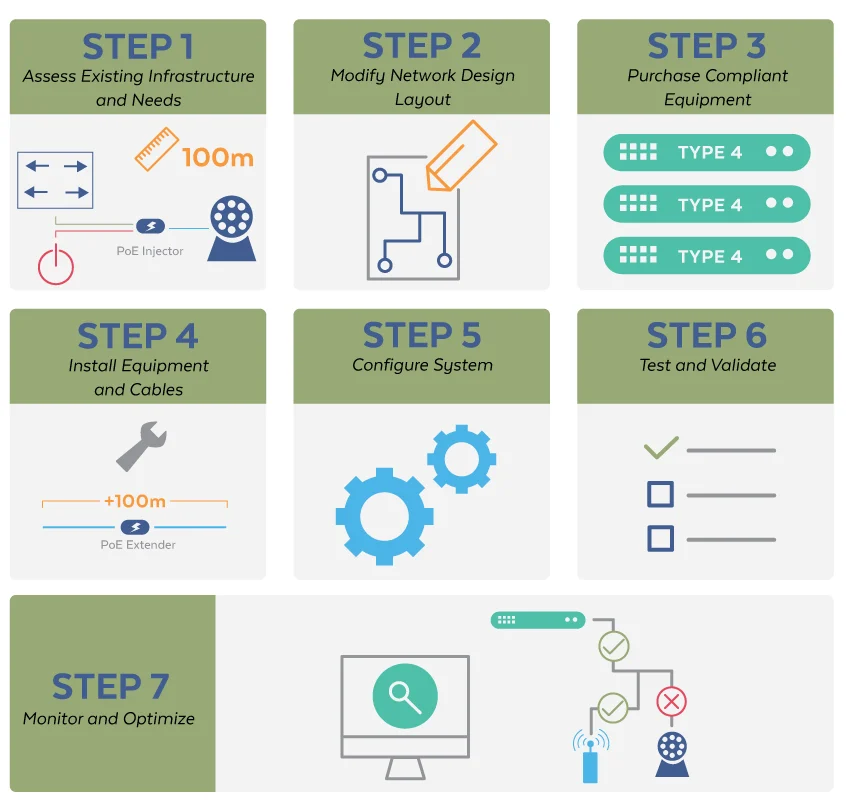
For commercial property owners, the journey toward this intelligent future involves a systematic approach:
- Assessment: Map the physical property to identify current cable runs. Ensure all planned segments are within the 100-meter limit for Ethernet transmission.
- Standardization: Upgrade to Cat 6a cabling to support the 10 Gbps bandwidth requirements of modern AI systems.
- Compliance: Select hardware that is not only Type 4 PoE compliant but also supports AI-integrated NVRs that prioritize data privacy and cybersecurity.
- Optimization: Deploy uninterruptible power supplies (UPS) and surge protection to protect sensitive AI hardware from power fluctuations.
Conclusion
The convergence of Type 4 PoE and AI represents a monumental shift in the commercial security sector. By transforming standard Ethernet cables into high-power conduits for data and electricity, property owners can overcome the financial and physical barriers that have long inhibited the adoption of smart, predictive security systems. As the industry moves toward 2030, the ability to rapidly integrate these intelligent systems will distinguish the most secure, efficient, and resilient commercial properties in the market. Investing in high-power PoE is no longer just a technical upgrade; it is a fundamental requirement for protecting the assets and occupants of the modern world.