







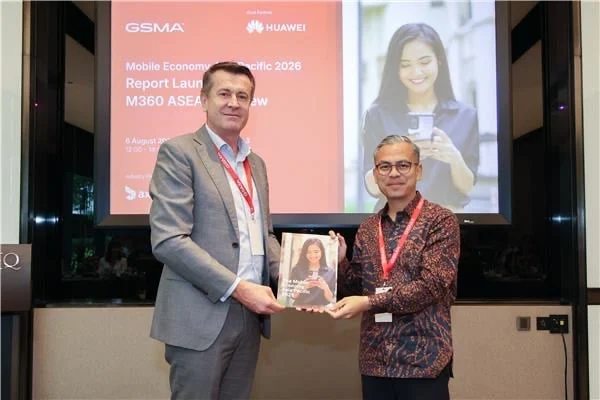
KUALA LUMPUR – The Asia Pacific region is on the precipice of a seismic economic shift. According to the newly released Mobile Economy Asia Pacific 2026 report from the GSMA, mobile technologies and services are projected to contribute a staggering US$1.4 trillion to the regional economy by 2030. This figure represents a robust 40% increase from the US$1 trillion generated today, signaling that the mobile ecosystem remains the bedrock of future regional prosperity.
The findings, unveiled in Kuala Lumpur ahead of the highly anticipated M360 ASEAN 2026 conference, paint a picture of a region transitioning from simple connectivity to an era of intelligent, sovereign, and highly resilient digital infrastructure.
The Four Pillars of the Next Digital Phase
The report identifies four critical factors that will dictate the trajectory of growth in the coming years. As the Asia Pacific market matures, stakeholders—ranging from government bodies to telecommunications operators and technology providers—must navigate:
- The Artificial Intelligence (AI) Explosion: AI is no longer a peripheral technology; it is becoming the primary driver of productivity.
- The Digital Trust Crisis: As services go digital, the incidence of fraud is rising, threatening the very foundations of consumer confidence.
- The Demand for Infrastructure Resilience: Amidst climate change and geopolitical volatility, the reliability of networks has moved from a technical concern to a strategic national priority.
- The Rise of Digital Sovereignty: Nations are increasingly focusing on retaining control over their data, infrastructure, and local AI capabilities to ensure national security and economic independence.
Chronology: A Path to 2030
The evolution of the Asia Pacific mobile economy is a story of continuous advancement. While the journey to 2030 is long, the current climate provides a baseline for understanding the speed of this transformation:
- 2024: The region experiences a pivotal moment in cyber threats, with 31% of ASEAN consumers reporting exposure to scams.
- 2025: The threat landscape worsens, with reported scam instances climbing to 45% of the ASEAN population, forcing a policy and industry-led security crackdown.
- 6 August 2026: The GSMA releases the Mobile Economy Asia Pacific 2026 report, setting the strategic agenda for the next four years.
- 9–10 September 2026: M360 ASEAN convenes in Kuala Lumpur, bringing together global leaders to operationalize the report’s recommendations.
- 2027–2029: Projected period of aggressive investment in local AI infrastructure and cross-border digital governance frameworks.
- 2030: The realization of the $1.4 trillion economic contribution target, contingent on the successful mitigation of the four identified pillars.
Supporting Data: Economic Productivity and Security
The GSMA data suggests that the integration of 5G, AI, and the Internet of Things (IoT) will be the primary catalysts for productivity. Manufacturing and services are expected to emerge as the biggest winners, together accounting for more than 50% of the economic gains linked to advanced mobile technologies.
The Trust Gap
Perhaps the most alarming statistic in the report is the spike in digital fraud. In ASEAN, the increase from 31% to 45% of consumers encountering scams in just one year serves as a "canary in the coal mine." This trend is not merely a social nuisance; it is an economic drain that threatens to stifle the adoption of digital financial services.
Operators are responding by shifting their business models. They are moving away from being "pipes" of data and toward being "guardians" of data—investing heavily in fraud prevention, secure cloud services, and AI-driven security environments that protect both consumers and the enterprise sector.
Official Responses and Strategic Leadership
The release of the report has garnered significant attention from regional leaders, who view the mobile sector as a primary vehicle for national development.
Julian Gorman, Head of Asia Pacific at the GSMA, emphasized the evolving burden of responsibility on the industry:
"The mobile industry is playing an increasingly important role in shaping Asia Pacific’s digital future. As this report shows, economies and societies across the region are becoming increasingly digital, with mobile networks serving as the foundation for AI adoption, digital trust, and resilient digital infrastructure. As governments place greater emphasis on digital sovereignty and citizens expect stronger protection from scams, fraud, and cyber threats, the responsibilities placed on our industry continue to grow."
YB Dato’ Seri Fahmi Fadzil, Malaysia’s Minister of Communications, highlighted the importance of regional cohesion:
"Malaysia is proud to support ASEAN’s journey towards a more integrated, innovative, and inclusive digital future. By strengthening collaboration across governments, industry, and communities, we can unlock new opportunities for growth, expand digital participation, and ensure the benefits of digital transformation are shared across the region."
Dr. Kao Kim Hourn, Secretary-General of ASEAN, added that the regional bloc’s future is inextricably linked to these technological advancements:
"As ASEAN advances its vision for an integrated and future-ready digital economy, collaboration across governments, industry, and regional partners will be essential. M360 ASEAN offers a valuable platform to foster dialogue, strengthen partnerships, and support the collective efforts needed to transform our shared digital ambitions into meaningful outcomes."
Implications for the Future: A Paradigm Shift
The implications of the Mobile Economy Asia Pacific 2026 report are far-reaching, forcing a recalibration of how nations and corporations approach digital expansion.
Resilience as a Strategic Asset
Historically, network resilience was managed as an operational KPI. Today, it has become a matter of national security. As geopolitical tensions fluctuate and climate-related disruptions—such as typhoons or floods—become more frequent, the ability of a mobile network to remain operational is paramount. Governments are now looking to operators to build "hardened" infrastructure that can withstand physical and cyber-attacks, ensuring that the digital backbone of the nation remains intact even in times of crisis.
The Sovereignty Debate
The trend toward "Digital Sovereignty" is perhaps the most complex challenge for the coming years. While globalization once favored open, borderless digital environments, the modern era is seeing a move toward nationalized data centers and local AI development. The challenge for the region will be to balance this need for sovereignty—ensuring that data remains under local legal jurisdiction—without creating "digital silos" that stifle innovation and cross-border collaboration. The GSMA report suggests that operators are uniquely positioned to navigate this, acting as the bridge between national security requirements and the need for global connectivity.
The Role of M360 ASEAN
The upcoming M360 ASEAN conference serves as the crucible where these high-level report findings will be forged into policy. By convening ministers, regulators, and industry titans, the event aims to move beyond rhetoric and toward concrete action. The focus will be on creating "trusted digital ecosystems"—environments where AI can flourish without compromising privacy, and where infrastructure is robust enough to support the next generation of industrial applications.
Conclusion
The path to a $1.4 trillion mobile economy by 2030 is not guaranteed. It requires a delicate balancing act: integrating cutting-edge AI while maintaining human-centric trust; pursuing national digital sovereignty while fostering regional integration; and investing in massive infrastructure expansion while ensuring that infrastructure is resilient enough to endure an increasingly volatile world.
As the GSMA report concludes, the mobile industry is no longer just a telecommunications sector; it is the fundamental engine of the Asia Pacific’s socioeconomic future. The decisions made in the next few months—starting at the M360 ASEAN summit—will determine whether the region achieves this ambitious growth or falls victim to the challenges of an increasingly complex digital landscape.
For those interested in the future of the region’s digital infrastructure, registration for M360 ASEAN 2026 is currently open, offering a gateway to the conversations that will define the next decade of Asian innovation.