






By Jeff Yoders, ENR Senior Technology Editor
LAS VEGAS — The architectural, engineering, and construction (AEC) industry has long grappled with the "data silo" problem—a challenge where the vast troves of institutional knowledge, past project histories, and firm-specific standards remain trapped in PDFs, legacy software, and the minds of veteran engineers. On September 28, 2026, during the annual Autodesk University gathering, a significant bridge was built across that divide.
Global design powerhouse Arcadis announced a strategic, expanded partnership with software giant Autodesk. This collaboration aims to move beyond simple automation, focusing instead on the co-development of AI assistants that integrate directly into the design process. Unlike previous software integrations, this deal centers on the Model Context Protocol (MCP), a move that industry analysts believe could fundamentally alter how complex infrastructure and building projects are delivered globally.
The Convergence of Expertise and Artificial Intelligence
The partnership is built on a simple premise: AI is only as valuable as the data it is fed. By integrating Arcadis’ deep sectoral expertise—ranging from water management to massive infrastructure projects—with Autodesk’s robust platform architecture, the firms intend to create "project intelligence."
At the heart of the initiative is the expansion of Autodesk Assistant. This AI-driven tool is designed to parse geometry, interpret engineering intent, and synthesize decades of project history. By embedding this capability directly into the tools Arcadis designers use every day—including Revit, Civil 3D, and the cloud-native Forma platform—the firms are attempting to make AI a silent, intelligent collaborator rather than a standalone dashboard.
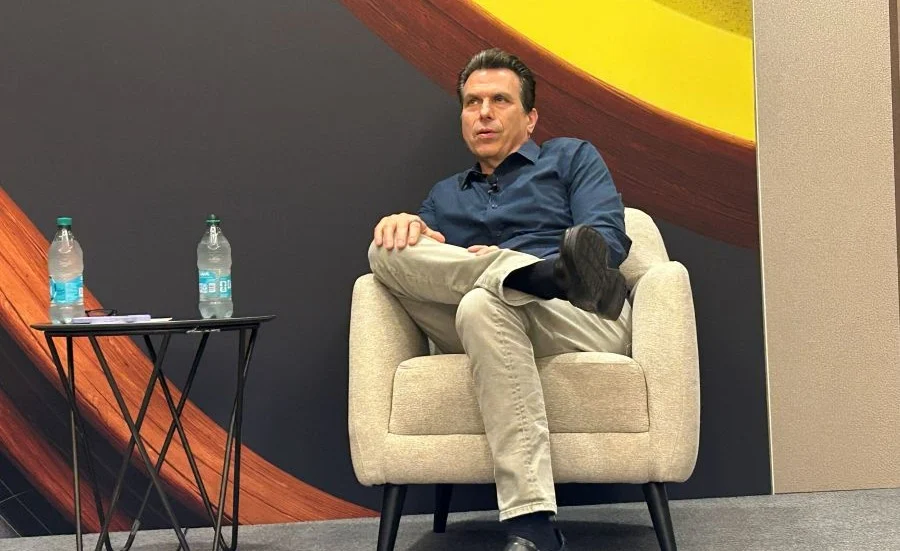
"AI creates the most value when grounded in deep industry expertise, trusted data, and real-world context," noted Andrew Anagnost, CEO and President of Autodesk, during a media briefing at Autodesk University. "That is how AI becomes project intelligence, helping people make better decisions and deliver better outcomes for clients."
Chronology of a Digital Transformation
The path to this partnership was not an overnight development but the result of a multi-year digital maturity strategy at Arcadis.
- 2023–2024 (The Foundation): Arcadis began aggressively digitizing its internal workflows, focusing on a unified "Data & Knowledge" strategy. The firm sought to move away from fragmented project management tools toward a centralized cloud-based environment.
- Early 2025 (The Pilot Phase): Arcadis and Autodesk initiated low-level testing of AI integration within specific pilot projects. The goal was to determine if AI could accurately interpret "firm standards" versus general industry benchmarks.
- September 2026 (The Announcement): At Autodesk University in Las Vegas, the companies formalized their partnership, announcing the integration of the Model Context Protocol (MCP) as the backbone of their collaborative efforts.
- Q4 2026 and Beyond (The Rollout): The firms have committed to a rolling implementation schedule, where co-developed AI assistants will be introduced to Arcadis teams globally, starting with high-complexity infrastructure projects where data consistency is most critical.
Unlocking Data Through the Model Context Protocol
Perhaps the most technical, yet consequential, aspect of the announcement is the use of the Model Context Protocol (MCP). Developed by AI leader Anthropic, MCP serves as an open standard that creates secure, two-way connections between AI large language models (LLMs) and external, private data sources.
In the current AI landscape, many tech providers offer "agent-native" BIM platforms that operate in a closed loop. While these are effective for basic tasks, they often struggle to incorporate a firm’s proprietary "tribal knowledge." By utilizing MCP, Arcadis can feed its internal datasets—its unique design standards, historical project constraints, and proprietary client requirements—into the AI agent while retaining full ownership and control of that data.
This distinction is vital for a firm of Arcadis’ scale. In an era where intellectual property (IP) is the primary currency of design firms, the ability to leverage AI without "leaking" trade secrets into a public model is a competitive necessity. This is the first time Autodesk has entered into a co-development agreement of this nature with a global design firm, signaling a shift in the company’s business model from being a mere software vendor to a strategic co-developer.
Supporting Data: Why the Industry Needs This Now
The AEC sector is currently facing a "productivity gap." According to recent industry metrics, while the manufacturing sector has seen massive productivity gains through automation over the last three decades, construction and engineering have remained relatively flat.

- Complexity Management: As projects grow in scale, the number of stakeholders and variables increases exponentially. Arcadis’ data suggests that up to 30% of a design team’s time is spent searching for information or ensuring that current designs align with historical project constraints.
- The Expertise Drain: With many veteran engineers reaching retirement age, the "brain drain" is a real threat to project quality. By encoding professional judgment into the Autodesk Assistant, Arcadis is effectively "capturing" the expertise of its senior staff to mentor younger designers in real-time.
- Accuracy at Scale: Human error in design remains a leading cause of rework. By automating the validation of design decisions against a client’s specific standards—using MCP-linked data—the partnership aims to reduce design-stage errors by a projected 15-20% within the first two years of full adoption.
Official Perspectives: The Human-in-the-Loop Philosophy
The narrative surrounding this partnership is carefully curated to address a common anxiety in the industry: the fear of AI replacing the human designer. Heather Polinsky, CEO of Arcadis, was firm in her messaging regarding the role of the designer in this new era.
"Our designers will remain in charge of project decisions," Polinsky stated. "Working with Autodesk, we are bringing that knowledge directly into the workflows where our teams design and decide. By combining our expertise with AI, data, and digital capabilities, we can help our teams work smarter, more efficiently, and with greater accuracy, giving them more time to focus on the complex challenges our clients need us to solve."
This "human-in-the-loop" philosophy is essential for the adoption of AI in high-stakes engineering. In fields like civil engineering or water management, the cost of a mistake can be millions of dollars or, in extreme cases, a threat to public safety. By positioning AI as a "knowledge assistant" rather than an "autonomous generator," the firms hope to build trust with their professional staff.
Implications for the Future of AEC
The implications of this deal are far-reaching, both for Arcadis and the wider market.
1. The Rise of the "Proprietary AI" Advantage
As firms begin to realize that the models themselves (GPT-4, Claude, etc.) are becoming commodities, the true value will shift to the data that firms feed them. Arcadis’ move to secure its own MCP connections suggests a future where a firm’s competitive edge is defined by the quality and accessibility of its internal data.
2. A New Business Model for Software Giants
Autodesk’s pivot to co-development indicates that the "one-size-fits-all" software era is waning. For global firms, the future lies in bespoke, AI-augmented platforms that look and feel like standard software but act like internal, institutional knowledge bases.
3. Impact on Project Delivery
For the end client, this should theoretically lead to faster project delivery, lower costs due to reduced rework, and higher quality outcomes. If an AI assistant can instantly flag that a design choice in Revit violates a client’s specific sustainable material requirement—based on data pulled from a decade of past projects—the design cycle is shortened significantly.
4. Setting the Standard
By aligning with an open standard like MCP, Arcadis and Autodesk are setting a precedent for interoperability. If other design firms and software providers adopt similar protocols, the industry could move toward a more integrated, digital ecosystem where data flows seamlessly between tools, firms, and project phases.
Conclusion: A Collaborative Future
The announcement from Las Vegas marks a pivotal moment in the digital evolution of the built environment. While the industry is often accused of being slow to innovate, the alliance between Arcadis and Autodesk suggests a maturing approach to technology. It is no longer about buying the latest tool; it is about building a system that learns, adapts, and preserves the human expertise that has driven engineering progress for centuries.
As the industry watches to see how these co-developed AI agents perform on live, multi-million dollar projects, one thing is clear: the integration of institutional data with generative AI is no longer a futuristic concept. It is the new foundation of professional practice. By empowering their teams with the right data at the right time, Arcadis is positioning itself not just to survive the AI transition, but to lead the industry in defining what it means to be a modern, data-driven engineering firm.