





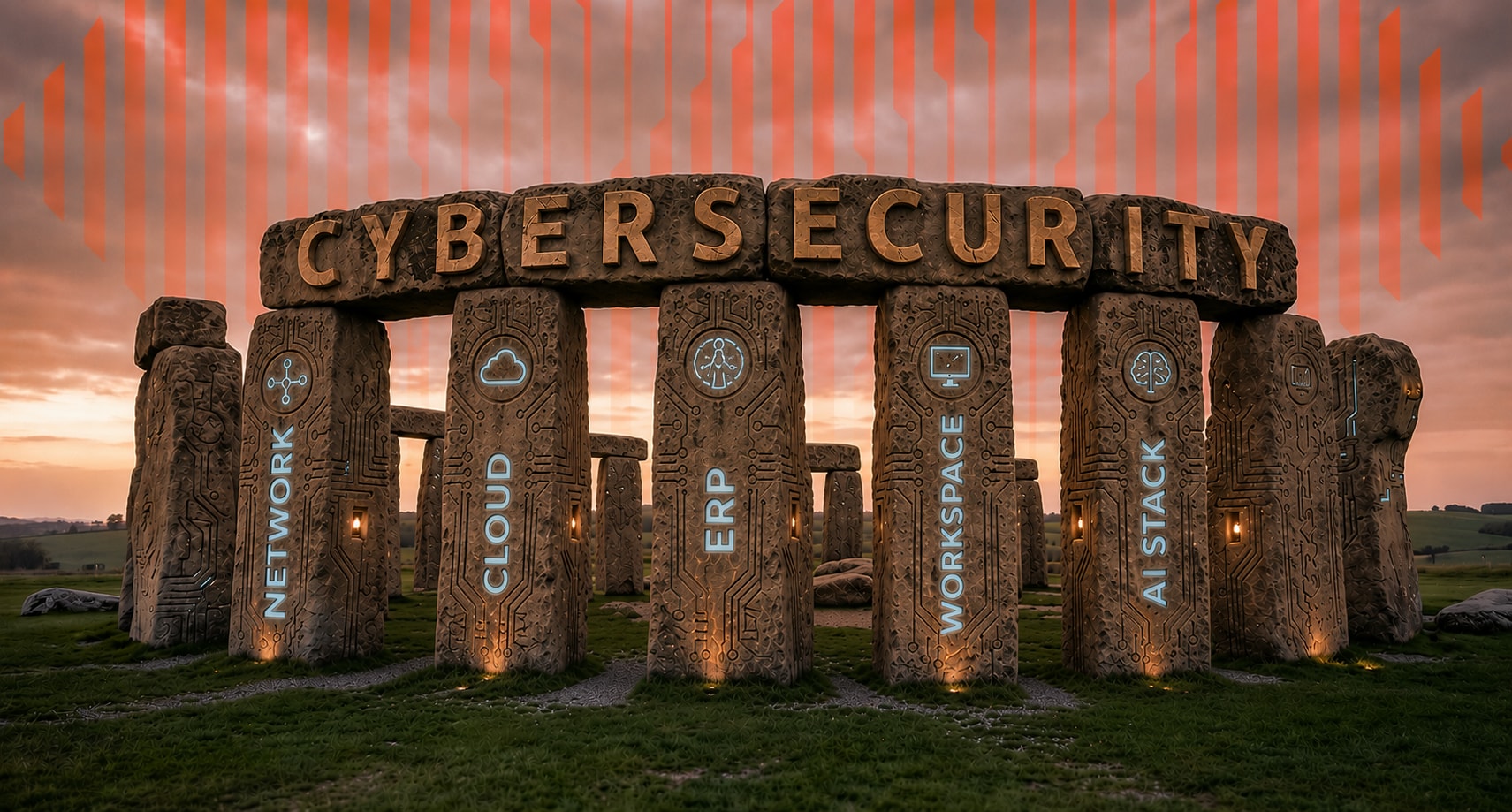
The enduring silhouette of Stonehenge against the dawn sky is a testament to its remarkable resilience, a monument that has weathered millennia of natural forces and human intervention. This ancient marvel, surprisingly, offers a potent metaphor for the complex and ever-evolving landscape of modern cybersecurity. In an era defined by escalating cyber threats, unprecedented technological fragmentation, and the seismic introduction of Artificial Intelligence, the principles of robust architectural design are more critical than ever for safeguarding digital assets.
This exploration delves into the parallels between the enduring strength of Stonehenge and the imperative for resilient cybersecurity architectures. It examines the challenges posed by vendor fragmentation and data silos, the transformative power of platformization and AI, and the strategic importance of a unified, data-centric approach to security.
The Fragmented Digital Landscape: A Tale of Thirty Solutions
In a recent insightful conversation with the Chief Information Officer (CIO) of a prominent healthcare technology firm, a recurring pattern emerged that resonates across many multinational enterprises throughout Europe, the Middle East, and Africa (EMEA). Over time, these organizations have inadvertently evolved into a complex mosaic of fragmented vendor solutions, characterized by disparate "micro-platforms" built on proprietary technologies. This rapid proliferation has, in turn, created formidable data silos, rendering it virtually impossible for any single, monolithic IT architecture to provide comprehensive protection.
The increasing heterogeneity of hardware, operating systems, and cloud infrastructures has given rise to a dizzying array of cybersecurity tools and services, many of which are hyper-optimized for specific vendor ecosystems. This "best-of-breed" approach, while seemingly logical in its pursuit of specialized solutions, has led to a scenario where large organizations often deploy more than 30 distinct cybersecurity point solutions to safeguard their digital assets. The advent of Artificial Intelligence (AI) into this already intricate mix has only amplified the complexity, making the design of an effective cybersecurity solution as challenging as it is undeniably imperative.
Stonehenge: A Blueprint for Enduring Resilience
The striking simplicity and elegance of Stonehenge’s lintel-and-joinery construction serve as a powerful emblem of enduring resilience. Just as Stonehenge has withstood the relentless onslaught of natural elements and human endeavors, so too must organizations construct cybersecurity architectures capable of withstanding a revolutionary pace of change and an ever-diversifying threat landscape. This includes navigating geopolitical turbulence and the transformative influence of AI as it becomes increasingly integrated into business value chains.
For Chief Information Security Officers (CISOs), CIOs, board members, C-suite executives, and line-of-business leaders who are fundamentally concerned with operational resilience, the underlying cybersecurity architecture is not merely a technical consideration; it is a deeply strategic imperative.
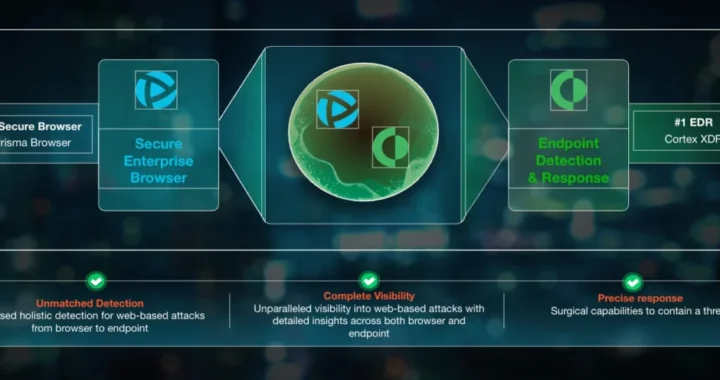
At its core, cybersecurity is a data problem. The more comprehensive the telemetry data an organization possesses, the more effectively it can execute sophisticated security algorithms and protect its vital digital essentials across all its enterprise IT pillars – encompassing Information Technology (IT), Operational Technology (OT), cloud environments, networks, the workplace, and endpoints. Companies like Palo Alto Networks are at the forefront of this data-centric approach, capable of aggregating relevant telemetry data from a vast spectrum of sources, including networks, firewalls, clouds, browsers, endpoints, and the internet.

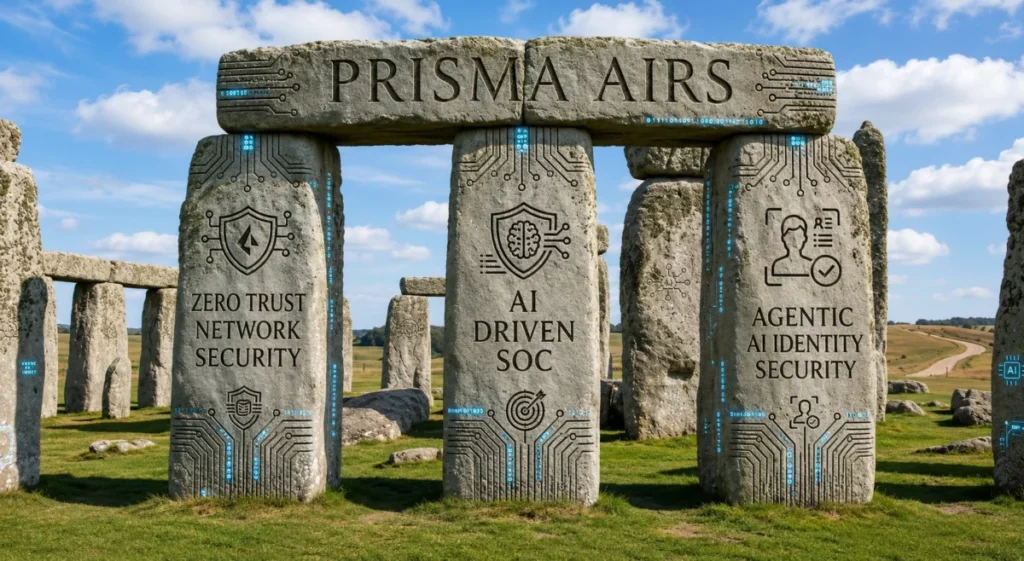
The massive, self-reinforcing pillars and platforms of stone that form Stonehenge bear a striking resemblance to how IT architects are now conceptualizing modern cybersecurity. In today’s complex technology architecture, the vertical pillars of Stonehenge can be likened to an organization’s specialized, vendor-specific IT domains. Without a strategically integrated, enterprise-wide zero-trust cybersecurity framework, these domains often operate with their own isolated security tools and capabilities, rather than contributing to a cohesive defense.
The Dawn of Platformization: Moving Beyond Point Solutions
Stonehenge’s remarkable resilience, mirrored in its construction, offers a compelling model for contemporary cybersecurity architecture. The deliberate and assured evolution towards modular platformization, which now spans all key domains of cybersecurity – including network, cloud, AI, identity security, and the essential building blocks for an AI-driven Security Operations Center (SOC) – represents the ultimate line of defense, demanding real-time efficacy. This platform-centric approach is the linchpin of a robust enterprise security strategy, built upon foundational pillars such as Identity, the Autonomous SOC, and Network Security.
The lintel of Stonehenge directly correlates with the burgeoning trend of cybersecurity platformization, a paradigm shift that is rapidly supplanting the outdated "best-of-breed" point solution mindset. This modular approach grants security architects the flexibility and control needed to integrate new security domain capabilities as evolving needs dictate. The mortise-and-tenon joinery of Stonehenge functions because its components interlock seamlessly, rather than being haphazardly stacked. Similarly, modern cybersecurity frameworks are increasingly built upon the principle of embedded functionality, ensuring that security is an integral part of the architecture, not an afterthought.
A prime example of this is Palo Alto Networks’ strategic decision to embed Precision AI at the core of its cybersecurity platform, rather than treating it as a supplementary tool. This integrated approach empowers Precision AI to fuel data analysis, drive workflows, and serve as an omnipresent resource for more intelligent and rapid prevention, detection, and response.
The Unifying Force of the Cyber Data Layer
Another critical element of any enduring architecture is its capacity to provide stability to the overall framework. In cybersecurity, this translates to the indispensable cyber data layer, integrated within a comprehensive zero-trust framework. As organizations continue to grapple with data silos spread across networks, cloud environments, SOCs, and edge systems, the cybersecurity data lake assumes paramount importance for the resilience of the entire cyber ecosystem. It is crucial to reiterate that cybersecurity, at its heart, is a data challenge, a distinct domain that spans all vertical IT pillars.
Stonehenge, with its inherent resilience, offers a construction blueprint for modern cybersecurity architectures. Our evolution towards modular platformization has been deliberate and assured, spanning key cybersecurity domains such as network, cloud, AI, endpoint, and identity security. This forms the bedrock of an AI-driven SOC, the critical, real-time last line of defense. This platform-centric strategy is the cornerstone of enterprise security, built upon key areas like Identity, the Autonomous SOC, and Network Security/SASE.
Navigating the AI Frontier: Securing the Future
A critical aspect that Stonehenge, in its ancient context, did not have to contend with is the security of AI itself, particularly the dual opportunities and threats presented by agentic AI. AI security must be an intrinsic part of platform design and implementation. Palo Alto Networks’ Prisma AIRS (AI Runtime Security) platform, for instance, is designed to ensure an organization’s growing AI portfolio remains a valuable asset rather than an inviting attack vector. AI agents are no longer merely another form of non-human identity; they represent an entirely new class of identity, exhibiting a significant disparity in speed between AI decision-making and human governance.
Malicious agents, employed by hackers, pose a substantial threat through "inside-out" attack paths targeting under-protected AI supply chains. This pressure is amplified by geopolitical dynamics and the increasing integration of AI into value chains, such as in the concept of the "Factory of the Future."
The recent acquisition of CyberArk further strengthens Palo Alto Networks’ offering with Idira, what is believed to be the industry’s most robust identity security platform. This positions Idira as another vital vertical pillar, connected to the overarching cybersecurity platform’s lintel. Cortex XSIAM and its associated security data lake are intentionally open, ingesting and correlating third-party telemetry alongside proprietary data. This process generates over 17 petabytes of telemetry data daily, forming a secure data layer accessible to users based on policy management and credential validation. Palo Alto Networks leverages this immense volume of data, coupled with continuous scanning of over 5 billion daily security events, to power Precision AI, enabling the detection and blocking of potentially catastrophic attacks. Currently, approximately 9.6 million new, previously unseen attacks are detected daily. The accelerating use of automated AI in attack vectors has drastically reduced data exfiltration times. What once took nine days approximately three years ago now frequently occurs in less than 24 hours, and in some cases, within a mere hour.
The Imperative of the Autonomous SOC and Real-Time Defense
In this rapidly evolving threat landscape, the importance of an Autonomous SOC pillar cannot be overstated. With compliance reporting windows continuously shrinking from days to mere hours, the demand for real-time, highly automated defense mechanisms is paramount. Mean-time-to-detect (MTTD) and mean-time-to-respond (MTTR) have become board-level imperatives, commanding increased attention and discussion at the highest echelons of organizations. The Autonomous SOC pillar is instrumental in helping enterprises achieve even faster detection and remediation, ideally reducing these times to mere minutes. Integrating historic enterprise SIEM solutions further streamlines SOC operations and yields significant financial benefits through the platformization of security-relevant data.
The Modern Supply Chain: Virtual and Vigilant
Finally, the concept of the supply chain, essential for building any platform, must be considered. For Stonehenge, this involved an impressive physical supply chain, with bluestones transported approximately 250 kilometers from Wales without the aid of modern transportation. In contrast, the supply chain for Palo Alto Networks’ cybersecurity platform is far more virtual, yet equally critical. It frequently faces attacks on third-party interdependencies, including SaaS applications, APIs, and, in the era of Frontier AI models, open-source components.
Architects of Tomorrow’s Security: A Legacy of Resilience
Much like the pyramids, the Great Wall of China, and the Roman road system, the most remarkable aspect of Stonehenge is not solely its engineering elegance, but its enduring ability to withstand changing conditions and threats over time. Whether one holds the title of CEO, board member, CIO, CISO, or security engineer, the decisions made regarding cybersecurity carry profound implications. To achieve Stonehenge-like resilience, technical and business leaders must commit to an architectural model designed not only for current needs but also for the projected demands of the long term.
Therefore, cybersecurity must be architected as a horizontal, dedicated platform that spans all IT domains and business units. This unified approach enables the provision of real-time, platformized cybersecurity for the future. And that future is undeniably an increasingly AI-driven business world.
Helmut Reisinger is CEO for Europe, Middle East, and Africa at Palo Alto Networks.