





By Engineering News-Record Staff
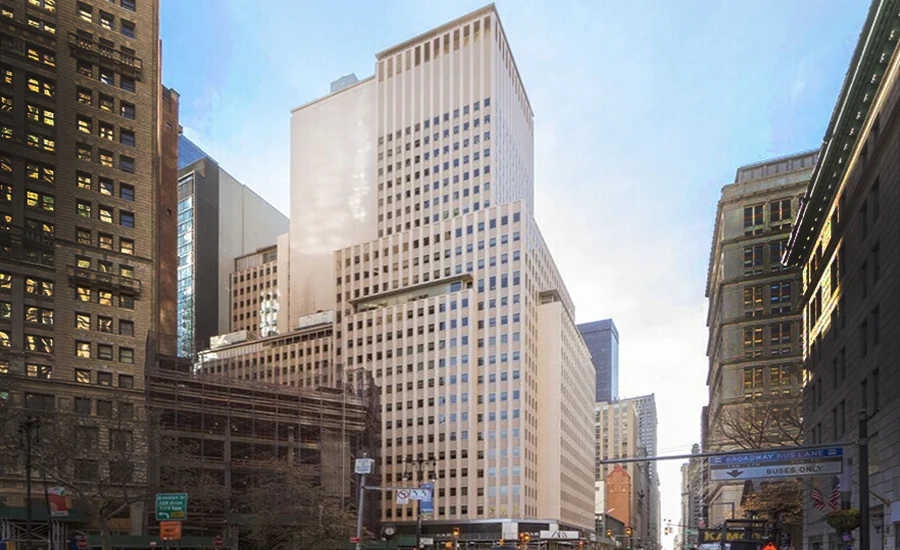
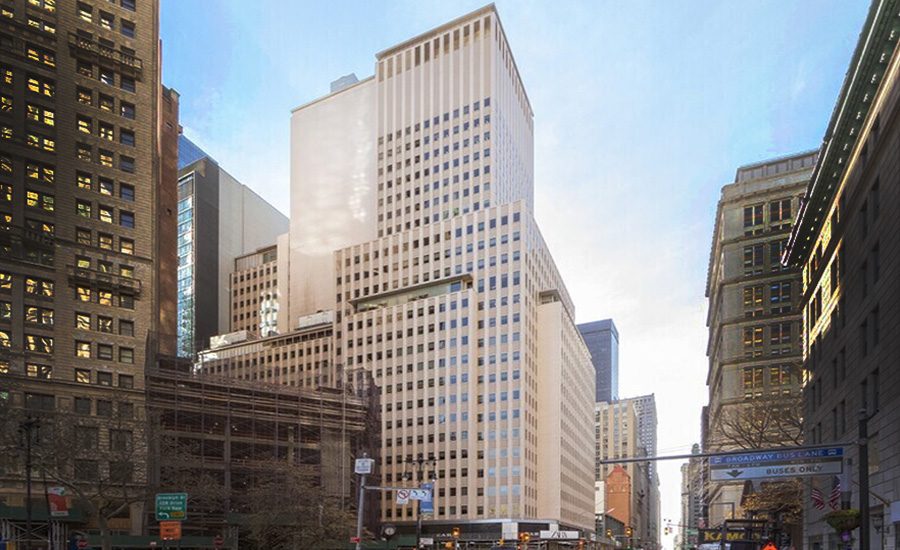
For the second time in less than a month, New York City officials have slammed the brakes on a high-profile office-to-residential conversion project, signaling a sea change in how the Department of Buildings (DOB) approaches the complex engineering challenges of adaptive reuse. On July 24, the DOB issued a full stop-work order at 222 Broadway in Lower Manhattan, halting the transformation of the former office tower into a 788-unit residential complex.
The enforcement action follows a period of heightened regulatory sensitivity sparked by a recent structural emergency at the former Pfizer headquarters in Midtown. As developers across the city race to convert aging commercial stock into housing, the recent administrative crackdown suggests that the era of "business as usual" for adaptive-reuse projects has come to a sudden and rigorous end.
The Chronology of Compliance Failures
The escalation at 222 Broadway did not occur in a vacuum; it was the culmination of a weeks-long regulatory standoff between the project’s development team—led by GFP Real Estate and TPG Real Estate—and the city’s forensic engineering unit.
Early Warning Signs (March – July 11)
The core of the issue dates back to March, when two newly constructed concrete beams on the 32nd floor of the building exhibited significant cracking. While the project team, including structural engineer of record DeSimone Consulting Engineers, moved to address the issue with a remedial repair plan involving through-rods and steel plate strapping, the critical error, according to the DOB, was the failure to notify the city of the structural incident.
The issue remained beneath the surface until a proactive enforcement inspection by the DOB on July 11. During this visit, inspectors discovered the beam repairs had already been completed. While DeSimone Consulting Engineers provided an attestation asserting the building remained stable and that the repairs were sufficient, the DOB was alarmed by the lack of transparency.
The July 13 Partial Stop-Work Orders
Following the July 11 discovery, the DOB Forensic Engineering unit issued two partial stop-work orders on July 13. These orders were driven by two specific findings:
- Non-conformance: A complaint alleged that the work performed did not align with previously approved construction documents.
- Procedural Deficiency: The project failed to provide the professional engineer-stamped design drawings mandated by Building Code Chapter 33.
These partial orders specifically prohibited the addition of any further loading to the concrete and steel frame, as well as nonstructural framing and interior finish work, effectively stalling the project’s momentum while the structural integrity of the 32nd-floor additions remained under review.
The July 24 Full Stop-Work Order
The situation reached a breaking point on July 23, when the DOB conducted a follow-up inspection. City engineers determined that the initial documentation provided regarding the cracks and the subsequent repair logic was incomplete. Consequently, on July 24, the city upgraded the partial orders to a full stop-work order.
The DOB has made it clear: the order will remain in effect until the agency is entirely satisfied that the engineering reports adequately account for the cause of the cracking and verify the long-term safety of the structure. While DeSimone submitted additional engineering reports on the day the full order was issued, the project remains at a standstill while the DOB conducts an exhaustive audit of those filings.
Stakeholder Perspectives and Official Responses
The project team, which includes general contractor Leeding Builders Group, finds itself in a defensive position. A representative for GFP Real Estate characterized the entire ordeal as a "reporting timeline discrepancy" rather than an active safety crisis.
"The project engineers determined that the repairs were structurally sound and that, based on their professional judgment, immediate notification to the DOB was not required at the time the cracks were discovered," the developer stated. The firm maintains that the building remains stable and that the dispute is primarily a matter of administrative protocol rather than a failure of physical engineering.
However, the Department of Buildings has pushed back against this narrative of administrative error. In an email to ENR, a spokesperson for the agency emphasized that while no "Vacate Order" was issued—meaning the building is not currently deemed an immediate threat to the public—the failure to report structural damage is a non-negotiable violation of the building code.
"The department is focused on ensuring that any structural modifications are documented, scrutinized, and approved," the DOB noted. "We will not lift the stop-work order until we are fully satisfied that construction can safely continue without risk to the public or the future residents of this structure."
The Shadow of the Pfizer Headquarters Emergency
The scrutiny at 222 Broadway is inextricably linked to the ongoing investigation into the former Pfizer headquarters conversion. Less than three weeks prior to the 222 Broadway order, the DOB halted work at the Midtown site after two structural columns buckled, necessitating an emergency evacuation and a massive stabilization effort.
The Pfizer incident served as a wake-up call for the NYC real estate industry. For years, the city has championed office-to-residential conversions as the panacea for a housing shortage and a glut of obsolete office space. However, the complexity of these projects—which often involve gutting massive, aging floorplates, adding rooftop amenities, and retrofitting older concrete skeletons to meet modern residential codes—has proven to be fraught with risk.
Structural Due Diligence in Question
Industry experts have noted that the "hidden" nature of existing building infrastructure often leads to unforeseen conditions that can destabilize a project during construction. When a building is converted, the distribution of weight changes, and the way columns and beams interact can shift in ways that original 20th-century blueprints may not have accounted for.
"The Pfizer emergency changed the temperature in the room," says one structural engineering consultant who requested anonymity. "The DOB is no longer taking ‘professional attestations’ at face value for major structural deviations. They want to see the math, the load-path analysis, and the full sequence of remediation before a single hammer swings again."
Implications for the Future of NYC Conversions
The fallout from these two high-profile work stoppages is already being felt across the construction industry. Insurance providers and lenders are reportedly tightening their risk assessment criteria for adaptive-reuse projects. There is a growing consensus that the "easy" path to converting office space is over; developers must now budget significantly more for structural due diligence, forensic inspections, and potential delays caused by heightened regulatory oversight.
A New Regulatory Normal?
For the City of New York, the challenge is to maintain a balance between encouraging necessary development and ensuring public safety. If the DOB continues to issue full stop-work orders at the first sign of reporting irregularities, the timeline for converting downtown office space could extend by months or even years.
Furthermore, the industry is bracing for potential regulatory changes. There is speculation that the DOB may move toward a more stringent oversight model for conversions, perhaps requiring independent third-party structural reviews for any project involving significant load-bearing changes.
The Path Forward for 222 Broadway
For now, 222 Broadway serves as a cautionary tale. While the development team remains confident that the structural repairs are sound, they must now satisfy a rigorous audit process. For the workers, the tenants-to-be, and the developers, the project is a reminder that in the world of high-stakes urban engineering, documentation is just as vital as steel and concrete.
As investigators continue to pore over the engineering reports, the construction industry is watching closely. The outcome at 222 Broadway will likely set a precedent for how the city manages the delicate, high-risk, and high-reward landscape of modern office-to-residential transformation. Until the DOB gives the green light, the silent cranes and hushed construction site in Lower Manhattan serve as a stark reminder of the city’s new, uncompromising standard for safety.