




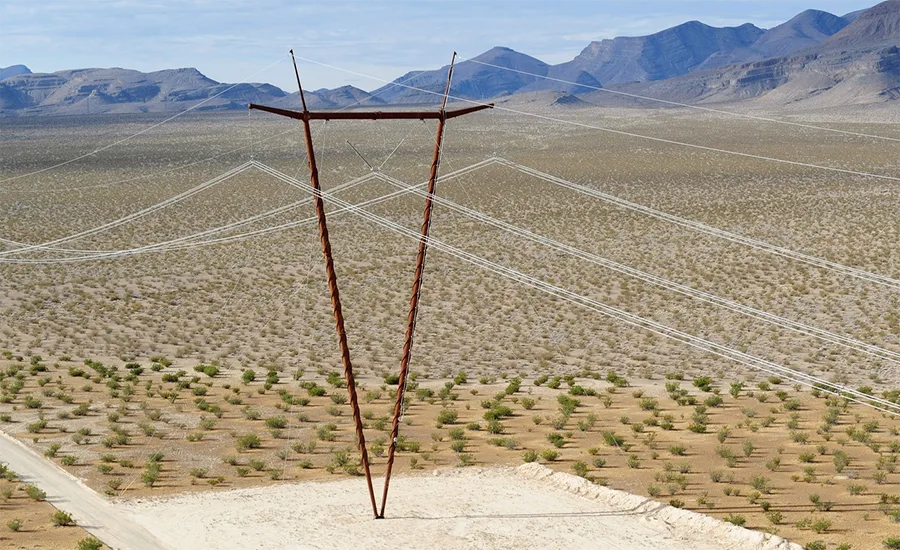
ELY, Nev. — The vision of a unified, bidirectional energy corridor spanning the American West has officially moved from the drafting table to the desert floor. On September 3, 2026, Great Basin Transmission LLC, an affiliate of the infrastructure investment firm LS Power, broke ground on the Southwest Intertie Project-North (SWIP-North). The commencement of this 285-mile, 500-kV transmission line marks a pivotal milestone for a project that has navigated decades of regulatory shifts, evolving energy markets, and complex interstate negotiations to become a linchpin of regional power reliability.
The project, valued at over $1 billion, serves as the final, critical link in a 576-mile high-voltage corridor extending from Idaho’s Magic Valley down to the Las Vegas area. By connecting the Midpoint substation in Idaho to the Robinson Summit substation near Ely, Nevada, the project completes a massive energy "superhighway" capable of moving 2,000 MW of electricity in either direction.
Chronology of a Decades-Long Endeavor
The roots of the SWIP-North project trace back to the 1980s, an era when regional energy planners first identified the need for a robust north-south backbone to facilitate the sharing of power resources. Despite federal authorization dating back to 1994, the northern segment of the proposed corridor remained a "missing link" for over thirty years.
LS Power acquired the development rights for the project in 2005, inheriting a complex set of environmental permits and land-use challenges. The project’s timeline accelerated significantly in the 2020s as the urgency for renewable energy integration and grid resilience reached a fever pitch.
- 1994: Original federal authorization granted for the transmission corridor.
- 2005: LS Power acquires development rights.
- May 2024: The U.S. Department of Energy commits up to $331 million to advance the project.
- January 2025: The Federal Energy Regulatory Commission (FERC) approves the development agreement between Great Basin Transmission and the California Independent System Operator (CAISO).
- December 2025: The Idaho Public Utilities Commission approves the project agreement for Idaho Power’s participation.
- January 2026: Nevada regulators grant final approval for grid construction.
- September 2026: Official groundbreaking ceremony in Ely, Nevada.
The Bidirectional Strategy: Why the Line Matters
The true value of SWIP-North lies in its versatility. In an era where regional grids are increasingly strained by extreme weather and the transition to intermittent renewable sources, the ability to shunt power north or south is a strategic asset.
California’s Stake: Accessing Idaho Wind
For California, the project represents a lifeline to clean energy. CAISO has long identified the need for direct access to Idaho’s vast wind resources to meet the state’s aggressive carbon-reduction mandates. By importing approximately 1,000 MW of Idaho wind power, California expects to significantly reduce congestion on the California-Oregon Intertie, a key transmission path that often reaches its limit during peak demand. Furthermore, the line provides a vital export route for California’s excess mid-day solar production, allowing the state to offload surplus energy to its northern neighbor when the sun is brightest.

Idaho’s Strategic Defense: Northbound Reliability
Conversely, Idaho Power is utilizing the project to secure 500 MW of northbound capacity. For the utility, this is a matter of long-term grid security. Utility planners projected that without the added capacity from the Desert Southwest, Idaho would face a critical energy deficit—estimated at 384 MW by 2029. By connecting to the lower-cost energy markets of the Southwest, Idaho Power gains a "least-cost, least-risk" solution to meet the rapidly rising demand from industrial growth and population influx.
Supporting Data and Financial Frameworks
The financial structure of SWIP-North is as intricate as its engineering. By late 2024, CAISO placed the project’s capital cost at $1.23 billion, a figure that excludes financing costs. Under a voluntary cost-sharing arrangement accepted by FERC, California ratepayers are responsible for approximately $950 million of this total, a burden deemed "just and reasonable" in exchange for the long-term reliability and environmental benefits the project delivers.
The project’s construction is underpinned by a fixed lump-sum pricing model, a move intended to insulate stakeholders from the inflationary pressures that have plagued large-scale infrastructure projects in recent years. This contract structure also includes stringent liquidated damages tied to schedule milestones, ensuring that contractors remain incentivized to meet the target operation date of June 2028.
Official Responses and Stakeholder Perspectives
The groundbreaking event saw a rare convergence of regional political and industry support. Nevada Governor Joe Lombardo participated in the ceremony, underscoring the state’s role as an energy crossroads.
"SWIP-North will help Idaho Power meet growing energy demands and reduce costs for our customers by connecting Idaho Power to the Desert Southwest’s low-cost energy resources," said Mitch Colburn, Idaho Power’s vice president of planning, engineering and construction.
However, the project has not been without its detractors. During the Idaho regulatory approval process, some local advocacy groups, including the "Stop Lava Ridge" coalition, voiced concerns over the project’s perceived link to large-scale wind farm developments in Idaho. Critics argued that the transmission line could facilitate unwanted industrialization of rural landscapes. Idaho Power, however, has maintained that SWIP-North is a transmission-only project designed for grid reliability, functioning independently of specific generation assets like the now-canceled Lava Ridge wind project.

The Idaho Public Utilities Commission, while approving the participation, remained cautious, declining to immediately authorize the recovery of project costs from ratepayers and reserving the right to conduct a full prudence review in a future rate proceeding.
Engineering and Construction: Building the Backbone
The engineering scope of SWIP-North is substantial. POWER Engineers, now a division of WSP Global, serves as the engineer of record and has completed over 75% of the design work. The construction scope includes:
- Transmission Line: The primary 285-mile, 500-kV line construction, awarded to Wilson Construction.
- Substation Upgrades: Significant expansions at the Midpoint and Robinson Summit substations to handle the increased load.
- Advanced Compensation: Implementation of new series-compensation equipment, which will be integrated into the existing One Nevada line, significantly increasing the power-transfer efficiency across the NV Energy system.
Labor for the project is being provided by IBEW Local 1245. As of August 2026, foundation work was already underway, with crews moving across the rugged terrain of eastern Nevada. The logistical complexity of building through remote, high-desert environments remains a significant challenge, yet project managers report that 99% of the required right-of-way has been secured, clearing the path for uninterrupted construction through the 2027 season.
Implications for the Western Interconnect
The completion of SWIP-North in 2028 will fundamentally alter the topography of the Western Interconnect. It serves as a test case for how competing regional interests—California’s hunger for renewables and Idaho’s need for base-load reliability—can be harmonized through shared infrastructure.
If successful, the project could serve as a blueprint for future inter-regional transmission projects. By demonstrating that high-voltage lines can provide equitable benefits across different state regulatory environments, the SWIP-North project is likely to accelerate the broader conversation regarding a unified Western grid. As the desert landscape is transformed by towers and transmission wire, the project stands as a testament to the fact that while the transition to a modern, decarbonized grid is complex, it is increasingly being built one link at a time.