





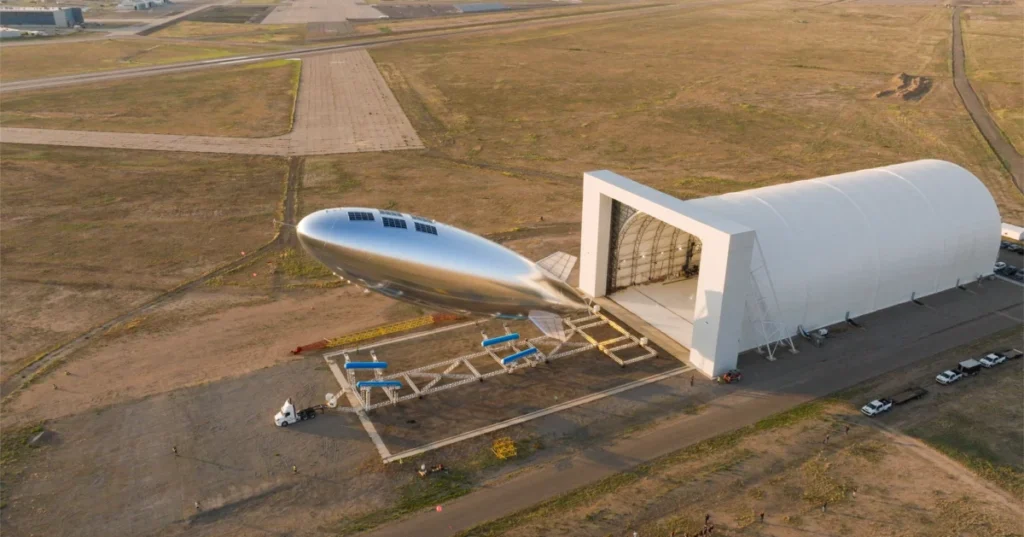
The global telecommunications landscape is on the precipice of a vertical revolution. In a landmark achievement for aerospace engineering and non-terrestrial networking (NTN), U.S.-based Sceye, in collaboration with Japanese telecommunications giant SoftBank Corp., has successfully completed a trans-Pacific flight of its High-Altitude Platform System (HAPS). The mission, designated as Service Test 1 (ST1), saw Sceye’s stratospheric aircraft journey more than 15,000 kilometers from New Mexico to Japan, effectively demonstrating the viability of the stratosphere as a critical layer of modern infrastructure.
This achievement does more than just break distance records; it validates a new tier of connectivity that sits between terrestrial cell towers and orbiting satellites. By delivering mobile broadband directly to unmodified smartphones from the edge of space, Sceye and SoftBank have moved HAPS technology from the realm of experimental science into the sphere of commercial readiness.
I. Main Facts: A Trans-Pacific Breakthrough in Connectivity
The ST1 mission represents a series of "firsts" for the aerospace and telecommunications industries. Launched from Sceye’s facility in New Mexico, the HAPS vehicle navigated the complex wind currents of the stratosphere for 13 days to reach Japanese airspace. This journey serves as a proof of concept for "persistent" connectivity—the ability of an unmanned, solar-powered craft to maintain a stable position over a target area for extended periods.
Key Highlights of the ST1 Mission:
- Distance and Duration: Over 15,000 km traveled in 13 days.
- Direct-to-Device Connectivity: Successful delivery of mobile broadband to standard, unmodified smartphones via SoftBank’s core network.
- The "SceyeCELL" Innovation: Utilization of a specialized stratospheric antenna designed to mimic a terrestrial cell tower but with a footprint 500 times larger.
- 3D Network Integration: Demonstrated communication between the HAPS platform and drones, as well as edge computing capabilities, supporting the vision of a multi-layered "3D" communication network.
- Commercial Validation: Testing included real-world applications such as voice calls, video streaming, and emergency alert systems.
The mission confirms that Sceye’s HAPS can operate like a geostationary satellite but at a much lower altitude—approximately 65,000 feet (20 kilometers). At this height, the platform is 1,800 times closer to the Earth’s surface than traditional geostationary satellites, drastically reducing latency and allowing for high-capacity data transmission using standard consumer hardware.
II. Chronology: From New Mexico to the Edge of Asia
The success of ST1 is the culmination of years of iterative testing and strategic investment. To understand the significance of this flight, one must look at the timeline of Sceye’s development and the specific phases of the trans-Pacific mission.
The Foundation: The Endurance Program
Earlier in 2026, Sceye completed its "Endurance Program" using the SE2 HAPS model. This mission saw the craft travel 10,000 km from New Mexico to the coast of Brazil. During that flight, the vehicle demonstrated its ability to remain over a specific area of operation for several days, proving that solar-powered propulsion and energy storage systems could survive the extreme temperature fluctuations of consecutive day and night cycles in the stratosphere.
The ST1 Launch and Transit
The Service Test 1 mission officially commenced on August 9, 2026, at 7:00 AM MDT. Taking off from New Mexico, the craft ascended into the stratosphere, where it utilized advanced material science and automated navigation to harness stratospheric winds.
The 13-day transit across the Pacific Ocean was a rigorous test of the vehicle’s structural integrity and autonomous flight systems. Unlike satellites, which follow a fixed orbit, HAPS must actively navigate to maintain its course or stay on station, all while relying on solar energy collected during the day to power both propulsion and telecommunications payloads through the night.
Arrival and Testing in Japan
Upon entering Japanese airspace, the ST1 platform immediately began its primary mission objectives in partnership with SoftBank. For the first time in Japan’s history, stratospheric infrastructure was integrated into a national mobile network to provide trial services. The craft performed edge computing tasks and facilitated communication with drones, proving its utility in complex, multi-vehicle aerial environments.
As of the latest reports, the ST1 craft has completed its primary objectives in Japan and is currently on its return leg across the Pacific, heading back toward the United States.
III. Supporting Data: The Technology of the Stratosphere
The technical superiority of HAPS lies in its unique positioning. The stratosphere is often referred to as the "Goldilocks zone" for telecommunications: it is high enough to avoid weather and commercial air traffic, yet low enough to provide high-speed, low-latency links.
SceyeCELL: The "Cell Tower in the Sky"
At the heart of the ST1 mission is SceyeCELL. This proprietary antenna technology is designed specifically for the stratospheric environment. While a typical terrestrial tower might have a range of a few kilometers, a single Sceye HAPS platform can cover an area of approximately 30,000 square kilometers. In practical terms, one HAPS unit can replace or augment the coverage of roughly 500 ground-based towers.
Technical Advantages Over Satellites
While Low Earth Orbit (LEO) satellites have gained popularity through services like Starlink, HAPS offers several distinct advantages:
- Latency: Because HAPS is significantly closer to Earth, signal delay is virtually non-existent, making it ideal for 6G applications and real-time AI processing.
- Cost-Efficiency: Launching a HAPS platform does not require a rocket. It is a fraction of the cost of satellite deployment and can be landed, upgraded, and redeployed.
- Direct Connectivity: Most LEO satellites require a ground terminal or "dish." Sceye’s technology connects directly to the phone in a user’s pocket.
Energy and Material Science
Operating in the stratosphere requires surviving temperatures as low as -90°C and intense UV radiation. Sceye’s use of advanced ultra-light materials and high-efficiency solar cells allows the craft to remain aloft for months at a time. The ST1 mission successfully demonstrated the "charge-discharge" cycle necessary for 24/7 operation, using batteries to sustain the payload during the long hours of stratospheric darkness.
IV. Official Responses: Leadership Perspectives
The successful flight has been hailed by leadership at both Sceye and SoftBank as a transformative moment for the industry.
Mikkel Vestergaard Frandsen, Founder and CEO of Sceye, emphasized the broader implications for global infrastructure:
“This flight marks a defining moment for Sceye and for the commercial potential of HAPS. Flying from the US to Japan demonstrates the performance required to make the stratosphere a viable layer of infrastructure and realize the future of AI, edge computing, and 6G. Together with SoftBank, we are moving beyond proving the technology to demonstrating how Sceye can complement and extend existing networks and deliver persistent connectivity at scale.”
Junichi Miyakawa, President & CEO of SoftBank Corp., highlighted the strategic importance of HAPS in SoftBank’s long-term vision for a "3D" network:
“SoftBank aims to build next-generation communications infrastructure that seamlessly connects the ground, the sky, and space. The fact that Sceye’s HAPS reached Japan from the United States and successfully provided Japan’s first trial services from the stratosphere marks an important step toward commercialization. By combining Sceye’s flight technologies with SoftBank’s communications expertise, we have gained the confidence to realize a three-dimensional communications network.”
Miyakawa further noted that the partnership would continue to evolve, integrating AI and 6G technologies to turn HAPS into a "new form of social infrastructure."
V. Implications: Redefining Global Connectivity and Infrastructure
The success of the ST1 mission carries profound implications for the future of the internet, disaster management, and environmental protection.
Bridging the Digital Divide
Despite the proliferation of fiber and 4G/5G, billions of people remain unconnected or under-connected. Terrestrial towers are often economically unfeasible in rugged terrain or sparsely populated rural areas. HAPS provides a scalable solution to fill these "coverage holes" without the massive capital expenditure of traditional ground infrastructure.
Disaster Response and Resilience
The ST1 mission specifically tested emergency alert messaging. In the event of an earthquake, flood, or hurricane—where ground-based towers are often the first things to fail—a HAPS platform can be deployed to the affected area to restore communications instantly. Because it operates above the weather, it remains unaffected by the conditions on the ground.
The 6G and AI Frontier
As the world looks toward 6G, the requirements for bandwidth and latency will become even more stringent. HAPS is perfectly positioned to handle the "edge computing" needs of 6G, processing data in the air to reduce the load on the core network. This will be essential for the future of autonomous vehicles, smart cities, and real-time AI applications.
Environmental Monitoring
Beyond telecommunications, Sceye’s platforms are equipped for real-time environmental monitoring. They can track methane leaks, monitor forest fires in real-time, and observe maritime activity with a level of detail that satellites cannot match. This makes HAPS a dual-purpose tool for both the digital economy and the green transition.
Conclusion
The journey of Service Test 1 from New Mexico to Japan is more than a feat of navigation; it is the opening of a new frontier. By successfully integrating the stratosphere into the global telecommunications grid, Sceye and SoftBank have proven that the sky is no longer the limit—it is the destination. As Sceye moves toward full commercial deployment in 2025 and 2026, the "cell tower in the sky" is set to become as ubiquitous and essential as the towers on the ground.