







NORCROSS, Georgia — August 13, 2026 — In a move signaling a seismic shift in the telecommunications landscape, Lightera, a global leader in optical fiber and connectivity solutions, today announced an ambitious, multi-continent expansion of its manufacturing footprint. The strategic initiative is designed to bolster production capacity for high-performance optical fiber and cable, directly addressing the insatiable demand for bandwidth generated by the rapid proliferation of artificial intelligence (AI), hyperscale data centers, and next-generation communications infrastructure.
The expansion, which spans facilities in the United States, Brazil, Japan, and India, represents a significant capital commitment to ensuring that the global digital economy remains connected. As the world pivots toward an AI-first future, Lightera’s decision marks a pivotal moment in the supply chain’s ability to keep pace with the massive technical requirements of modern cloud computing.
The Core Catalyst: Meeting the AI Infrastructure Demand
At the heart of Lightera’s expansion is a response to the unprecedented strain placed on existing communications infrastructure. As hyperscale cloud providers and enterprise technology giants accelerate their build-outs of massive data centers, the fundamental building blocks of the internet—optical fiber—are being consumed at a rate never before seen in the industry.
The Role of Rollable Ribbon Cable
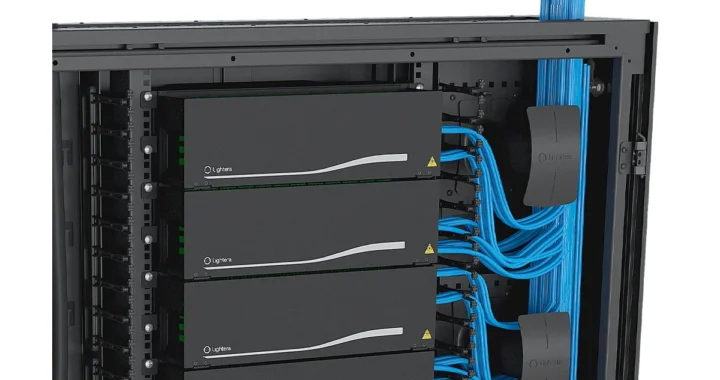
Lightera’s strategic focus centers on its proprietary Rollable Ribbon Cable technology. This innovation is not merely a product upgrade; it is an architectural necessity for modern data centers. As data density increases, operators require cables that provide higher fiber counts while remaining compact and flexible enough for efficient installation in increasingly crowded conduits and racks. Lightera’s technology facilitates scalable deployment, allowing for rapid network expansion without the logistical bottlenecks associated with traditional, rigid cabling.
Chronology of the Strategic Expansion
The timeline for this initiative reflects a long-term vision rather than a reactive measure.
- Early 2024–2025: Lightera begins intensive market analysis, identifying a "bandwidth wall" approaching as generative AI adoption hits a mass-market inflection point. During this period, the company secured several long-term purchase commitments from major cloud service providers, providing the financial foundation for the planned capital expenditures.
- Q3 2026: Official announcement of the global expansion strategy. The company confirms that internal engineering and site preparation for facility upgrades in four countries have been fast-tracked.
- 2027 (Implementation Phase): Ongoing construction and equipment integration. This year serves as the transition period where Lightera will install high-precision fiber drawing towers and automated cable-wrapping machinery across its global network.
- H2 2028 (Operational Milestone): The company expects the first wave of significant new production capacity to come online. By this point, the global supply chain for optical components is projected to be under maximum stress, positioning Lightera to absorb a substantial portion of the market demand.
Supporting Data: The Bandwidth Explosion
The urgency of this investment is underscored by data points reflecting the exponential growth of data traffic.
The AI-Data Center Nexus
Modern Large Language Models (LLMs) and distributed AI training clusters require high-speed, low-latency connectivity between thousands of GPUs. Traditional copper wiring is insufficient for the distances and throughput required in these environments. Industry forecasts suggest that global data center traffic will continue to grow at a Compound Annual Growth Rate (CAGR) exceeding 25% through 2030, driven almost exclusively by AI-driven workloads.
Global Supply Chain Dynamics
Lightera’s decision to diversify its manufacturing across the U.S., Brazil, Japan, and India is a calculated hedge against geopolitical and logistical instability. By decentralizing production, the company ensures that local markets—particularly the rapidly digitizing economies of the Global South—have direct access to high-performance fiber without the latency or tariffs associated with long-haul international shipping.
Official Responses: Leadership Perspectives
Holly Hulse, Chief Executive Officer of Lightera, addressed the implications of this expansion during a press briefing at the company’s Norcross headquarters.
"Artificial intelligence is fundamentally transforming the world’s communications infrastructure and driving unprecedented requirements for fiber density, performance, and scale," Hulse stated. "This expansion is not just about producing more cable; it is about building the nervous system of the future. We are committing to growing alongside our customers by increasing manufacturing capacity, strengthening our global supply chain, and continuing to innovate the advanced optical technologies required for the next generation of AI and cloud infrastructure."
The sentiment within the executive suite is one of proactive leadership. By aligning production capacity with the long-term forecasts of their hyperscale partners, Lightera is insulating itself from the "boom-and-bust" cycles that have historically plagued the telecommunications manufacturing sector.
The Broader Ecosystem: Beyond Standard Fiber
Lightera’s strategic roadmap extends well beyond traditional optical cable. The company is currently investing in a suite of "next-generation" optical technologies that are essential for the next decade of infrastructure development:
- Multicore Fiber (MCF): This technology aims to solve the capacity limits of traditional single-mode fiber by packing multiple light-carrying cores into a single strand.
- Hollow Core Fiber (HCF): By transmitting data through air rather than glass, HCF allows for lower latency—a critical requirement for high-frequency trading and real-time AI processing.
- Advanced Connectivity and Fusion Splicing: As the physical layer of the internet becomes more complex, the tools required to manage that complexity—connectors and splicing technology—must become more robust and easier to deploy in the field.
- Ocean Fiber: With the global submarine cable market undergoing a renaissance, Lightera’s commitment to undersea-grade fiber ensures that transcontinental data transit remains stable.
These investments demonstrate a "total ecosystem" approach. Lightera is not merely a supplier; it is positioning itself as a foundational partner for any entity—whether a private enterprise, a government, or a hyperscale cloud provider—that requires high-speed, reliable data transmission.
Implications for the Future of Communications
The implications of Lightera’s expansion are far-reaching.
Closing the Digital Divide
While the immediate driver is AI, the byproduct of this massive production increase is a general lowering of the cost-per-gigabit for communications globally. Increased capacity will eventually filter down to 5G and 6G deployments, allowing for broader rural broadband penetration and more stable connections in developing markets.
Setting the Industry Standard
As Lightera scales, it sets a benchmark for the rest of the industry. Competitors will likely be forced to accelerate their own capital expenditure plans to avoid being sidelined. This creates a virtuous cycle of investment that will benefit the global digital economy, ultimately leading to a more resilient, high-bandwidth internet.
A Commitment to Sustainability
Part of Lightera’s identity, as a member of the Furukawa Electric Group, is its focus on sustainability. The company has noted that its new manufacturing processes will be optimized for energy efficiency, reducing the carbon footprint of its fiber production. This aligns with the broader push by major tech companies to ensure that the infrastructure supporting AI is environmentally responsible.
Conclusion: A New Era of Connectivity
The announcement from Lightera on August 13, 2026, marks the beginning of a critical phase in the evolution of the internet. By investing in the physical foundation of the digital age, Lightera is ensuring that the promises of artificial intelligence—from autonomous systems to global real-time collaboration—are supported by a robust, scalable, and high-performance network.
As we look toward the latter half of the decade, the expansion of manufacturing capacity in Norcross and across the globe will serve as a testament to the essential role of optical fiber in a world that is increasingly defined by the flow of data. With the first phase of this new capacity expected to come online in 2028, the industry now has a clear signal that the infrastructure of the future is not just being imagined—it is being built today.
About Lightera
Lightera stands at the forefront of the optical connectivity revolution. With a rich history of optical science and a forward-looking approach to engineering, the company provides the essential components that power modern life. Headquartered in Norcross, Georgia, Lightera’s global reach enables it to serve a diverse array of sectors, including telecommunications, generative AI, medical, aerospace, and defense. As a proud member of the Furukawa Electric Group, Lightera remains dedicated to creating a safe, peaceful, and sustainable world through the power of advanced connectivity.
For further information, please visit www.Lightera.com.
Media Contact:
Sherry Salyer
Email: [email protected]