






In a strategic maneuver to alleviate the chronic bottleneck in global energy infrastructure, Norwalk, Connecticut-based GameChange Energy has officially commenced foundation work on a state-of-the-art, 300,000-square-foot high-voltage transformer manufacturing facility near Mumbai, India. The project, which represents a significant capital investment in specialized production machinery and testing systems, is explicitly designed to address the acute, multi-year supply chain shortages currently plaguing the United States power grid.
As the global energy transition accelerates, the demand for large power transformers (LPTs)—the silent workhorses of the electrical grid—has reached a fever pitch. By expanding its footprint in the Taloja industrial zone, GameChange Energy is positioning itself as a vital supplier for Western markets, with a business model that allocates approximately 75% of the new factory’s projected output to U.S. customers.
Chronology of Expansion: From Groundbreaking to Commissioning
The timeline for the Mumbai-area project is aggressive, reflecting the urgency of the sector it serves. Following the formal announcement on August 18, 2026, the company confirmed that construction, managed by real estate partner ESR at the Taloja Industrial & Logistics Park, is already underway.
- August 2026: Groundbreaking and commencement of foundation work.
- Q3 2027: Scheduled completion of the primary structural shell.
- Q4 2027: Installation of advanced manufacturing and material-handling equipment.
- Year-End 2027: Target date for facility commissioning.
- Q1 2028: Official commencement of commercial production.
This facility will operate in close proximity to GameChange’s existing 180,000-sq-ft Taloja plant, which was commissioned in 2025. While the older facility focuses on smaller-scale substation transformers, the new expansion represents a quantum leap in technical capability, moving the company into the specialized 500-kV class.
Technical Specifications: Scaling for the 500-kV Class
The transition from a 345-kV target to a 500-kV capacity, confirmed by CEO Phillip Vyhanek earlier this year, was a calculated move to capture a segment of the market where competition is thin and barriers to entry are exceptionally high.
"Relatively few manufacturers have capabilities in the 500-kV class range," Vyhanek noted in recent correspondence. "With the company building a new factory from the ground up, this is the right time to design the operation for higher-voltage capability."
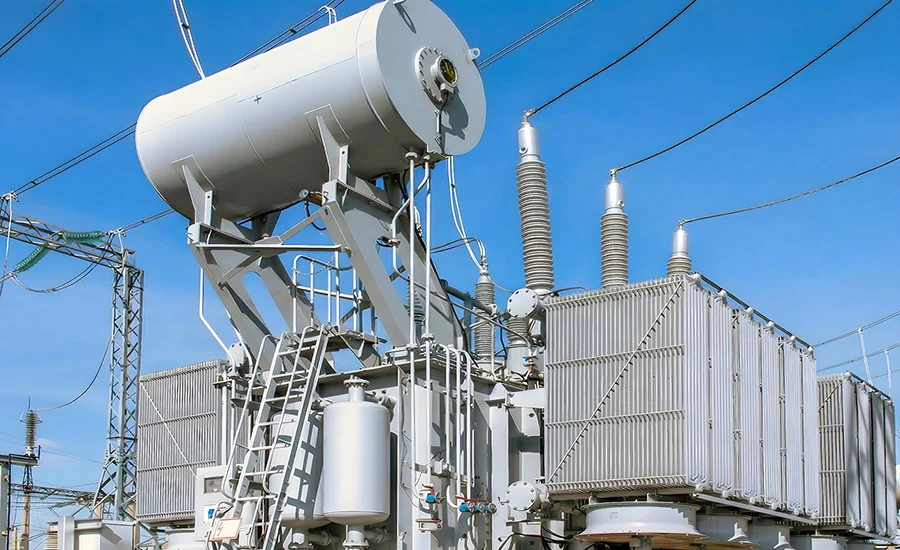
The facility is being engineered to handle the immense scale required for such equipment. The floor plan includes two massive, high-ceiling assembly bays designed for rigorous production and quality control. To ensure the integrity of the insulation systems required for high-voltage units, the winding and assembly areas will be strictly humidity- and dust-controlled.
Logistical infrastructure is equally robust. The plant will feature overhead cranes with a 250-ton lifting capacity, supported by a shop-wide load-handling system capable of moving components exceeding 400 tons. The centerpiece of the facility is its testing suite, which includes impulse voltage generators capable of testing 500-kV-class transformers at peak voltages of 2.6 million volts. These specifications allow the plant to produce up to 150 medium and large power transformers annually, rated up to 300 megavolt-amperes (MVA).
Supporting Data: The Anatomy of a Supply Chain Crisis
The necessity for GameChange’s expansion is underscored by recent findings from the National Laboratory of the Rockies (NLR). A Department of Energy-funded study released in July 2026 painted a sobering picture of the North American energy landscape.

According to the NLR, the lead time for procuring a standard 100-MVA large power transformer has stretched to between 2.5 and 3 years. For the specialized, extra-high-voltage (EHV) units that GameChange aims to produce, lead times can balloon to five years. This scarcity is exacerbated by a reliance on imports; currently, more than 80% of U.S. demand for large power transformers is satisfied by overseas manufacturers, leaving the domestic grid vulnerable to global shipping disruptions and geopolitical instability.
The supply chain is further complicated by shortages of essential raw materials and specialized components, including:
- Grain-Oriented Electrical Steel (GOES): A core material for transformer efficiency.
- Copper Conductors: Subject to price volatility and sourcing delays.
- Bushings and On-Load Tap Changers: Complex mechanical components that often serve as the primary bottleneck in transformer assembly.
Official Responses and Strategic Partnerships
GameChange Energy has remained tight-lipped regarding the specific capital expenditure of the project, emphasizing that the investment is largely tied to proprietary machinery and testing infrastructure rather than simple real estate costs. While the company has declined to name the specific engineering and architectural firms involved, the project is clearly backed by a robust international strategy.
A critical, albeit evolving, component of this strategy is a proposed technology-transfer agreement with an unidentified Ukrainian engineering firm. The partnership is designed to provide GameChange with the technical validation and design expertise required to reliably produce EHV transformers. While CEO Vikas Bansal previously indicated that the collaboration could bring products to market by 2027, Vyhanek noted that negotiations are ongoing. This partnership highlights the importance of institutional knowledge in a sector where design failures can lead to catastrophic grid outages.
The Global Implications of U.S. Grid Demand
The "GameChange" in this context is the company’s intent to shorten the delivery window for American utilities. By leveraging India’s manufacturing ecosystem—specifically the port, airport, and highway access of the Taloja Industrial & Logistics Park—the company aims to bypass the capacity limitations currently stalling projects in the U.S.
The logistics of shipping such massive equipment are formidable. Finished transformer bodies are often partially disassembled for transport, moving via heavy-haul trucks or rail to port facilities, where they are loaded onto specialized ocean vessels. Accessories, such as cooling radiators and bushings, are crated separately, requiring high-level coordination to ensure seamless reassembly at the project site.
For the U.S. power grid, which is currently undergoing a massive build-out to accommodate renewable energy integration, electric vehicle infrastructure, and data center growth, this capacity is not merely an upgrade—it is a necessity. The grid’s ability to move power from wind-swept plains and solar-rich deserts to urban load centers depends entirely on the availability of these large transformers.
Conclusion: A Pivot Toward Resilience
As GameChange Energy enters the next phase of its construction, the energy sector will be watching closely. The success of the Mumbai facility will serve as a bellwether for whether private enterprise can effectively address the "transformer gap" that has stymied grid modernization efforts for nearly a decade.
By diversifying the manufacturing base and focusing on the higher-voltage, 500-kV class of transformers, GameChange is not just building a factory; it is attempting to insulate the North American grid from the volatile market conditions that have left utilities waiting years for critical infrastructure. As the industry moves toward a more electrified future, the ability to rapidly manufacture and deploy these high-voltage giants will define the reliability of the global energy network for the next generation.