






The global telecommunications and information technology landscape is currently undergoing a radical transformation. As the demand for high-speed data transmission, IoT integration, and cloud-native applications accelerates, IT professionals are facing a paradox: while the need for computing and connectivity power is growing exponentially, the physical real estate available to house this infrastructure is becoming increasingly constrained. Whether in hyper-scale data centers or enterprise server rooms, the industry’s new mantra is clear: "Do more with less space."
Lightera, a leader in high-performance networking solutions, is at the forefront of this shift. By prioritizing high-density, compact, and energy-efficient architecture, the company is not only addressing today’s capacity challenges but is also setting the standard for how organizations should approach the modernization of legacy systems through intelligent retrofitting.
The Strategic Imperative: Managing the "Density Crisis"
The modern data environment is under immense pressure. The proliferation of IoT devices, the transition to Wi-Fi 6 and 7, and the rise of AI-driven computing have caused a surge in port density requirements. Every square foot of rack space now carries a premium, and the heat dissipation and cable management challenges that accompany high-density deployments have become critical bottlenecks.
The Rise of the Retrofit
While new construction projects have the luxury of starting with a blank slate, the vast majority of IT infrastructure is already in place. This is where the concept of "Retrofitting" moves from a maintenance task to a strategic pillar.
A retrofit is more than just a repair; it is the systematic modernization of existing infrastructure by replacing obsolete equipment while preserving the foundational assets that are still viable. By adopting a "future-ready" mindset during the initial phase of a project, companies can create modular, scalable environments that allow for growth without the need for expensive, disruptive structural renovations.
Chronology of an Evolution: From Bulk to Brilliance
To understand how we arrived at the current era of high-density infrastructure, one must look at the progression of cabling and connectivity standards over the last two decades.
- The Early 2000s: Focus was on base connectivity. Cables were thick, patch panels were bulky, and cable management was often an afterthought, leading to the infamous "spaghetti" wiring that plagued server rooms.
- The 2010s: The advent of virtualization and the cloud forced a shift toward better organization. Standards like Cat6A emerged, but early versions were often cumbersome, consuming excessive space in cable trays and conduits.
- The 2020s (The Present): We have entered the era of the "Compact Revolution." The industry has moved toward smaller diameters, higher-grade shielding, and density-optimized hardware. Lightera’s current portfolio reflects this maturation, focusing on maximizing port density without sacrificing the mechanical or electrical integrity required for modern 10Gbps+ environments.
Supporting Data: Why Density Matters
The economic and operational benefits of transitioning to high-density, compact infrastructure are quantifiable. According to recent industry benchmarks, transitioning to a high-density footprint yields several key advantages:
- Operating Expenditure (OPEX) Reduction: By reducing the footprint, companies can lower cooling requirements, as improved airflow in less-cluttered racks leads to more efficient heat dissipation.
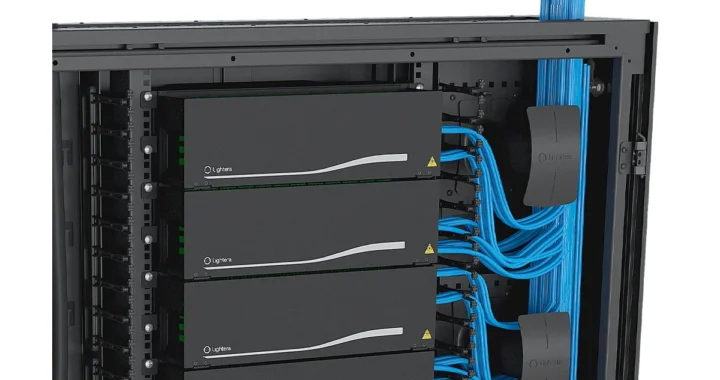
- Scalability: A high-density patch panel, such as the Lightera 48-port in 1U solution, effectively doubles the capacity of a traditional setup. This allows organizations to add new equipment to existing racks without needing to purchase additional cabinets.
- Sustainability: Smaller diameter cables mean less raw material usage and improved airflow within conduits and plenums. Furthermore, modernized, efficient networks draw less power and reduce the overall carbon footprint of the data center.
Official Perspective: Lightera’s Commitment to Innovation
In a recent briefing, Lightera’s engineering leadership emphasized that their development pipeline is strictly aligned with the realities of the modern "smart" enterprise. "We are not just selling cables; we are selling the ability for a business to grow without hitting a physical wall," said a spokesperson for the company.
Lightera has directed significant R&D efforts into the GIGALAN GREEN series. The core philosophy is to strip away the excess. By utilizing advanced materials, they have successfully created cables with significantly reduced diameters that maintain—and often exceed—the performance metrics of their predecessors. This enables IT managers to fit more connections into the same tray space, essentially increasing the "network density" of the facility by up to 30-40% in some configurations.
Key Technological Pillars:
- GIGALAN GREEN CAT.6A U/UTP: Designed for high-speed, high-bandwidth applications, this cable offers superior performance in a reduced diameter, making it ideal for the high-density bundles required in modern data centers.
- GIGALAN GREEN CAT.6A F/UTP: For environments requiring high electromagnetic interference (EMI) protection, this shielded variant provides the necessary robust performance without the bulk of older, legacy shielded cables.
- Angular HD Patch Panel (48 Ports in 1U): This is the flagship of the new line. By utilizing an angular design, the panel guides cables directly into vertical managers, reducing the stress on the cable and eliminating the need for horizontal cable management bars, which traditionally consume valuable rack units.
Implications: Building for the Future
The implications of this shift are profound. Organizations that fail to consider density in their infrastructure plans face a "scalability ceiling." When a network reaches its physical capacity, the cost of adding new ports becomes prohibitively expensive—not just because of hardware, but because of the labor involved in tearing out and replacing old, inefficient systems.
By adopting a strategy centered on high-density, compact solutions, companies realize three critical outcomes:
1. Operational Agility
When infrastructure is organized and compact, troubleshooting becomes faster. A well-managed patch field allows IT teams to identify and resolve issues in seconds rather than minutes, significantly reducing mean-time-to-repair (MTTR).
2. Economic Sustainability
Retrofitting with modern, high-density equipment is almost always more cost-effective than the "rip and replace" method. It allows companies to extend the lifespan of their existing physical assets while layering on the performance of the latest standards.
3. Future-Proofing
The next generation of network demands—be it 8K video streaming, real-time AI processing, or massive-scale IoT deployments—will require a foundation that is physically robust. Lightera’s approach ensures that the "plumbing" of the network is ready to handle the increased load without the need for constant, structural upheaval.
Conclusion: The Path Forward
The "Density Revolution" is not merely a trend; it is a fundamental shift in how we perceive physical space in the digital age. As Lightera continues to push the boundaries of what is possible in cable and hardware design, the message to the market is clear: the constraints of physical space need not be the enemy of innovation.
By embracing compact solutions, prioritizing intelligent retrofitting, and selecting high-density equipment like the GIGALAN GREEN series, IT leaders can build networks that are as agile as the software they support. In an era where every inch counts, the companies that thrive will be those that view their physical infrastructure not as a static burden, but as a dynamic asset designed for continuous, efficient, and sustainable growth.
The future is here, it is compact, and it is ready to scale.