






Executive Summary: A Decade of Legal Pursuit
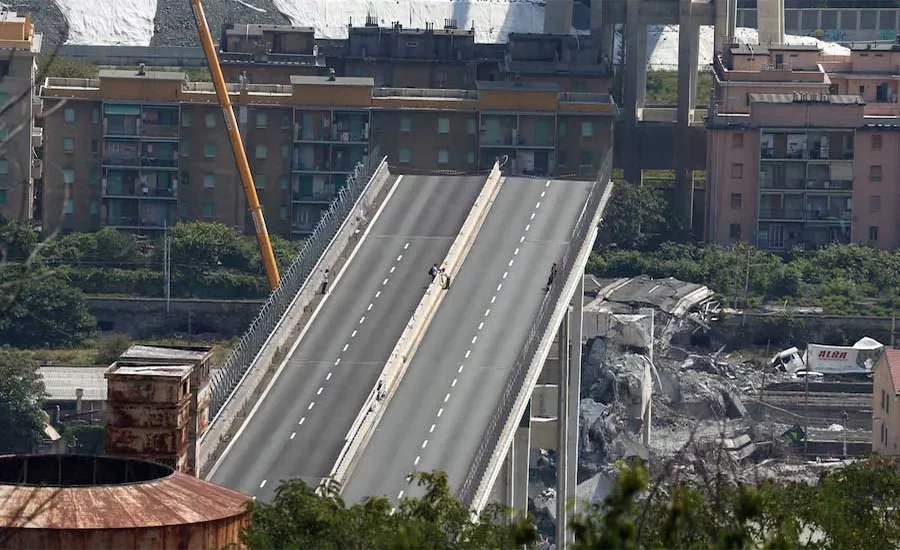
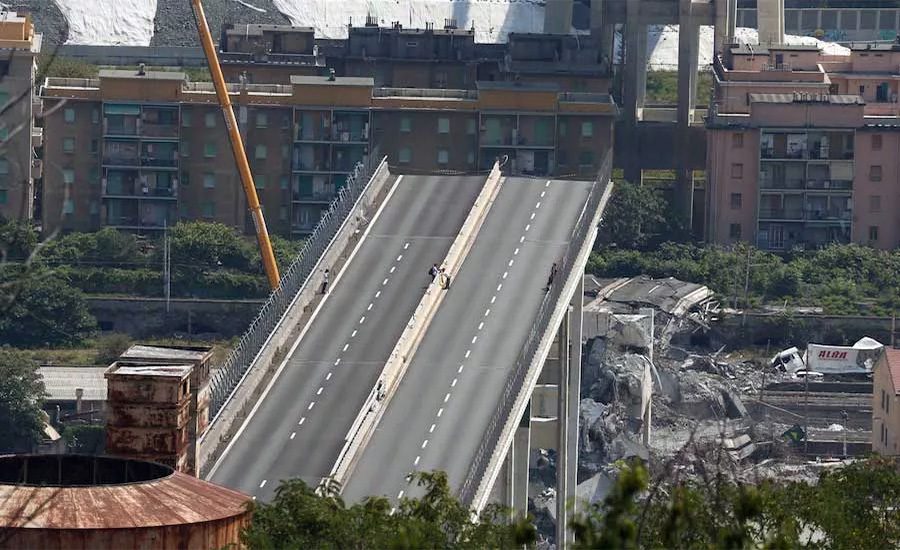
On July 16, the Tribunal of Genoa delivered a watershed moment in the history of Italian infrastructure management, handing down criminal convictions to 32 former executives, engineers, and public officials. The verdict concludes an exhaustive eight-year legal battle following the catastrophic collapse of the Morandi Bridge (Polcevera Viaduct) on August 14, 2018. The tragedy, which occurred during a severe rainstorm, claimed 43 lives as sections of the concrete structure plunged onto rail lines, warehouses, and city streets below.
Giovanni Castellucci, the former CEO of Autostrade per l’Italia—the highway operator responsible for the bridge—was sentenced to 12 years in prison. Michele Donferri Mitelli, the company’s former maintenance chief, received an 11-year term. While these sentences represent a significant judicial response to the disaster, the court’s decision was nuanced, involving various acquittals and the dismissal of certain charges due to expiring statutes of limitation.
The trial, characterized by its staggering scale, involved 284 hearings and over 12 terabytes of digital evidence, marking it as one of the most complex infrastructure-related prosecutions in Italian history.
Chronology of the Disaster and Investigation
The collapse of the Morandi Bridge did more than sever a vital northern Italian artery; it shattered public trust in the oversight of the country’s highway system.
- Pre-2018: The bridge, built in the 1960s, had long been a subject of engineering debate. Despite identifying structural issues, Autostrade had only reached the planning phase for a $23-million reinforcement project for Piers 9 and 10 by the time of the collapse.
- August 14, 2018: Approximately 200 meters of the viaduct collapsed. The images of the dangling roadway became an international symbol of infrastructure neglect.
- 2019–2020: While the criminal investigation proceeded, the site was cleared and replaced by the new Genoa San Giorgio Bridge, designed by renowned architect Renzo Piano. It opened to traffic in 2020, serving as a rapid engineering response to the disaster.
- 2021–2026: The judicial process moved through an arduous discovery phase, involving hundreds of witnesses and the assembly of massive technical reports.
- July 16, 2026: The Tribunal of Genoa issued its first-instance verdicts, concluding the primary phase of the criminal trial.
The Anatomy of Failure: Technical and Legal Findings
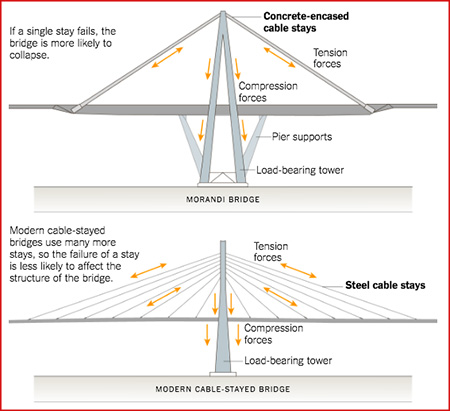
The core of the prosecution’s case centered on a "system of defects" within the upper portion of the Genoa-seaward stay of Pier 9. The Morandi Bridge design was unique, utilizing a limited number of concrete-encased stay cables rather than the modern standard of numerous, inspectable steel stays.
Expert Testimony and Faulty Inspection
Court-appointed experts presented a damning critique of the maintenance culture at Autostrade and its subsidiary, SPEA. They argued that the monitoring methods employed—specifically reflectometric testing—were qualitative and insufficient. Crucially, the experts concluded that no direct examination had ever been performed on the interior of the cables at the top of the critical Pier 9 stay.
The defense had posited that the corrosion was caused by an "undiscovered construction defect" related to an air void trapped during the original 1960s pour. However, the court-appointed experts rejected this, noting that the sheer volume of rusted steel indicated a long-term, chronic intrusion of water and oxygen through cracks in the concrete—a process that should have been caught by adequate, rigorous inspections.
The Question of Foreseeability
A critical distinction made by the court was between "objective foreseeability" and "conscious intent." The tribunal concluded that while the collapse was indeed foreseeable and preventable, there was no evidence that the defendants actively anticipated the disaster and chose to ignore it. The convictions were based on high-level negligence—a failure to act, oversee, or implement known safety standards—rather than a malicious desire to see the structure fail.
The Infrastructure Chain: Who is Responsible?
The tribunal’s ruling emphasized that the failure was not the result of a single "bad actor" but a systemic collapse of accountability. The defendants included:
- Autostrade per l’Italia and SPEA executives: Responsible for operational maintenance and inspection scheduling.
- Infrastructure Ministry Officials: Tasked with the public oversight of the concessionaire. The court found that these officials failed to adequately audit the operator, effectively creating a vacuum of regulatory pressure.
- Designers and Committees: Members of the Technical-Administrative Committee and engineers involved in the stalled reinforcement project for Piers 9 and 10 were also held accountable for their roles in the delayed execution of vital safety work.
Egle Possetti, president of the victims’ committee, underscored this point, noting that the verdict finally identified that the "controller" (the state oversight body) failed to stop the "operator" (the private company), proving that the disaster was a failure of the entire governance chain.
Official Responses and Corporate Apology
In a move that many observers noted was "long overdue," Autostrade per l’Italia issued a formal apology just one day before the verdict. CEO Arrigo Giana, speaking on behalf of the firm—now under different management—admitted that the company’s failure to apologize earlier had compounded the suffering of the victims’ families.
"The actions and choices of some left indelible wounds," Giana wrote in an open letter. He emphasized that the company is currently under a new ownership structure, one that has made infrastructure monitoring and transparency a "moral imperative."
Conversely, defense attorneys for Giovanni Castellucci have already signaled their intent to appeal. Their primary argument remains that the court’s ruling improperly assigned criminal liability to broad management roles rather than focusing on specific individual failures. They continue to maintain that the structural defect was an inherent, latent flaw in the bridge’s original design that remained hidden from all parties for five decades.
Broader Implications for Engineering and Governance
The legacy of the Morandi Bridge trial will likely ripple through the European engineering sector for years. The verdict serves as a stark warning to concessionaires and public bodies that "cost-saving" measures or administrative inertia in maintenance cycles carry severe legal risks.
Re-evaluating Infrastructure Maintenance
The case has prompted a nationwide re-evaluation of how Italy manages its highway concessions. It has reinforced the necessity of:
- Direct Inspection Protocols: Moving away from reliance on non-destructive, indirect monitoring toward hands-on, invasive structural audits.
- Regulatory Independence: Ensuring that the bodies supervising private highway operators have the teeth and the independence to halt traffic if safety standards are not met.
- Documentation Transparency: The requirement for better, more granular records of structural health to ensure that institutional memory is not lost during management transitions.
As the written opinion of the court is expected within 90 days, the engineering community awaits further details on how the judges weighed the competing technical theories. While the defendants maintain their innocence, the families of the 43 victims have finally seen a legal conclusion to the "curtain of smoke" that they claim obscured the truth for years.
The Morandi Bridge remains a haunting reminder of the fragility of man-made structures. Its replacement, the San Giorgio Bridge, stands as a testament to progress, but the legal proceedings that followed have ensured that the lessons of the collapse will be woven into the future of civil engineering safety standards across the globe. As the appeal process begins, the focus shifts from the debris of the past to the future of accountability in public infrastructure.