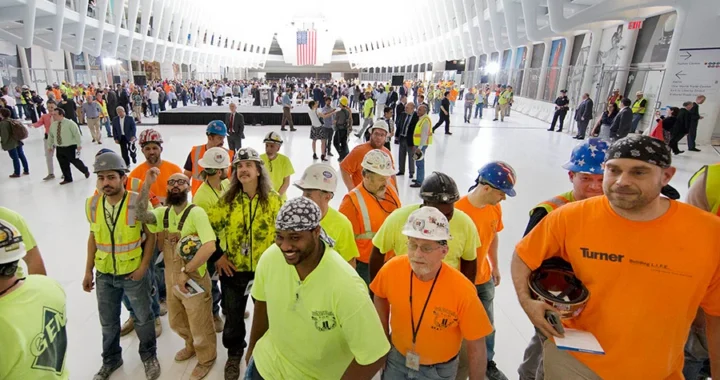







In an industry defined by monumental projects—from high-tech data centers and massive grid infrastructure to sprawling hospital complexes—the most critical component remains the human element: the skilled craft worker. Yet, for decades, the construction industry has relied on a fragmented, analog system for sourcing and onboarding talent. Recognizing this systemic bottleneck, New York-based startup Skillit is deploying artificial intelligence agents to fundamentally reshape how the industry finds, screens, and hires its workforce.
On June 22, Skillit announced a significant strategic partnership with two of the industry’s heavyweights: DPR Construction and Suffolk Technologies, the venture capital arm of Suffolk Construction. This collaboration, bolstered by equity investments from DPR’s WND Ventures and Suffolk Technologies, marks a pivotal moment in the professionalization of construction recruitment. While the specific dollar amounts of these investments remain undisclosed, the partnership signals a long-term commitment to digitizing a workforce that has long operated in the shadows of traditional recruitment platforms.
The Genesis of a Digital Solution
The impetus for Skillit’s creation is rooted in the personal history of its founder and CEO, Fraser Patterson. A former journeyman carpenter who eventually transitioned into running his own general contracting business in New York, Patterson experienced the inefficiencies of the labor market from both sides of the hard hat.
"I was trying to find labor, and in many instances, that labor was ultimately available, but finding it was difficult because the construction workforce has never really been digitized," Patterson explains. "The skills and preferences of craft workers are, for all intents and purposes, invisible."
The problem, as Patterson identified it, was that while white-collar industries were revolutionized by platforms like LinkedIn and Indeed, the construction trades remained tethered to word-of-mouth networks, physical job boards, and disjointed union halls. In 2021, when Patterson and his team began architecting Skillit, they quickly realized that simply cloning existing recruitment platforms would fail. The nuances of the construction industry—varying union jurisdictions, open-shop requirements, per-diem structures, and regional relocation needs—required a "purpose-built" architecture.
Chronology: From Concept to Industry Standard
- 2021: Fraser Patterson founds Skillit, aiming to address the invisibility of skilled labor in the U.S. construction market. The team begins extensive consultations with ENR Top Contractors to understand the pain points of large-scale project management.
- 2022: Skillit pivots away from generic job board models to focus on an AI-agent-led approach that mimics the way craft workers actually communicate and work.
- 2023: The company secures early-stage funding from a consortium of tech-focused investors, including MetaProp, Building Ventures, Bull Capital, and Holt Ventures.
- June 2024: Skillit optimizes its AI voice-command interface, allowing workers to build profiles and search for jobs in a hands-free environment suitable for field workers.
- June 22, 2026: Skillit announces a strategic partnership and equity investment from DPR Construction (via WND Ventures) and Suffolk Technologies, cementing the platform’s position as a preferred tool for industry giants.
Leveraging AI Agents to Solve "The Tedium"
One of the primary hurdles in digitizing the construction workforce is the nature of the work itself. Skilled tradespeople are often on jobsites for ten to twelve hours a day, leaving little time or energy to maintain digital resumes or navigate complex job application interfaces.
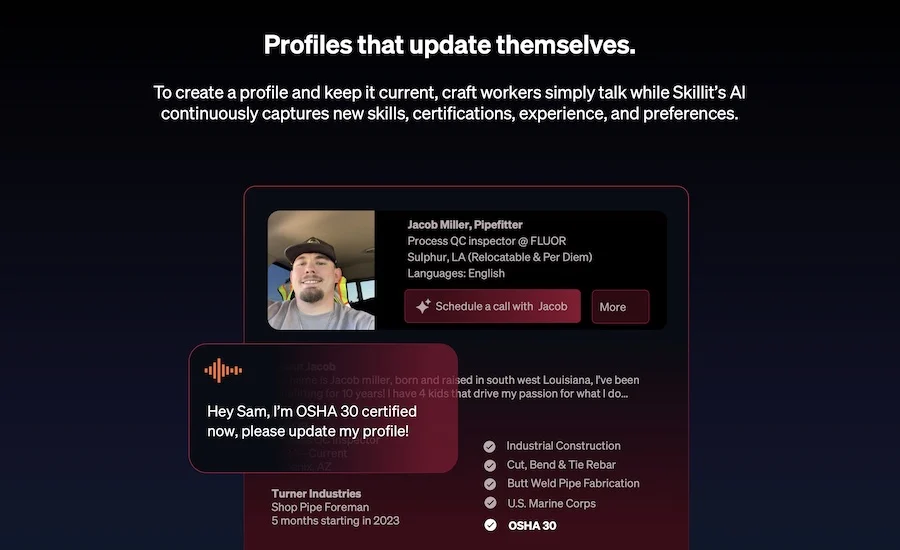
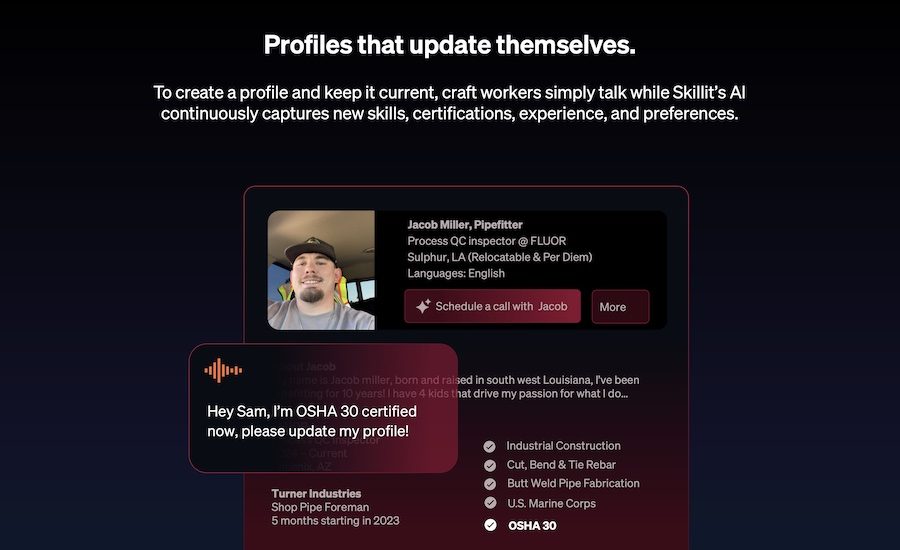
Skillit’s solution utilizes AI agents that operate as digital assistants. These agents are designed to perform the administrative heavy lifting—cataloging project experience, responding to job postings, and filling out profile details—based on native voice commands from the user.
"The first way in which we’re using AI is helping workers build out a profile that can help them discover work," Patterson notes. "The next piece is using AI to dynamically ask the questions that the worker is being asked, which actually comes from the demand on the platform. We are matching the needs of the contractor with the capabilities of the individual in real-time."
By removing the "friction" of the application process, Skillit ensures that the digital profile remains a living, accurate reflection of a worker’s evolving skillset, rather than a static document that becomes outdated within months.
Understanding the Landscape: Why "Top Contractors" Matter
Patterson’s research involved sitting down with leaders from the ENR Top 400 Contractors to map out the reality of modern hiring. He discovered that the most successful firms are juggling massive, mission-critical projects that require a sophisticated approach to labor deployment.
"If you sit with them, you start to realize they’re hiring multiple trades at once, across multiple regions," says Patterson. "You’ve got a union in one market, a different union in another, and open-shop models in others. You have to account for per diems, relocation packages for traveling crews, and specific certifications."
This complexity is precisely why Skillit has gained traction. The platform doesn’t just list jobs; it understands the "nuance of the jobsite." It acts as a bridge between the rigid requirements of large-scale construction contracts and the flexible, high-demand nature of the modern construction worker.
Official Responses and Strategic Implications
The investment from DPR and Suffolk is more than a financial transaction; it is a signal of a broader industry shift.
Eric Lamb, a board member at DPR Construction, believes that the platform is a necessary evolution. "We see the future of construction hiring as more connected, more responsive, and grounded in real jobsite needs. Skillit’s platform reflects that direction," he says.
For Suffolk, the investment is part of a larger mandate to create cost certainty in an era of extreme labor volatility. Jit Kee Chin, chief technology officer at Suffolk Construction and managing partner of Suffolk Technologies, highlights the competitive stakes involved.
"Skillit is addressing a critical gap in the industry with technology purpose-built for the realities of construction hiring and labor deployment," Chin states. "As labor becomes the industry’s most constrained resource, the ability to attract and deploy skilled talent will increasingly define the winners and losers in construction."
Implications for the Future of Construction
The implications of the Skillit platform extend far beyond simple recruitment. If the industry can effectively aggregate and verify the skills of its workforce, it opens the door to better project forecasting, improved safety compliance, and a more equitable distribution of work.
1. The Death of the "Invisible Worker"
By digitizing the craft workforce, Skillit is effectively ending the "invisibility" that has plagued tradespeople. When workers have a verifiable, digital record of their experience—vetted by AI and validated by previous project managers—they gain greater leverage in the market and a more streamlined path to employment.
2. Operational Resilience for Contractors
For large contractors, the ability to "tap into" a pre-screened, verified pool of labor reduces the time-to-hire significantly. In the high-stakes world of data center construction or infrastructure upgrades, where delays are measured in millions of dollars per day, this efficiency is a massive competitive advantage.
3. A New Paradigm for Tech Investment
The involvement of venture arms like WND Ventures and Suffolk Technologies underscores a maturing construction technology (ConTech) ecosystem. Investors are no longer looking for "disruptors" that try to replace the contractor; they are looking for "enablers" that solve specific, localized problems within the existing project delivery framework.
Conclusion: The Path Forward
As the construction industry faces an aging workforce and a persistent shortage of skilled labor, the need for intelligent, responsive recruitment tools has never been greater. Skillit’s integration of AI agents to manage the tedious aspects of the job search represents a major step toward a more digitized, transparent, and efficient construction industry.
By aligning with industry giants like DPR and Suffolk, Skillit is not just providing a piece of software; it is helping to establish a new industry standard. The winners of the next decade in construction will be those who can successfully manage their human capital as effectively as they manage their material supply chains. With AI-driven platforms leading the way, the "invisible" craft worker is finally stepping into the light, providing the industry with the stability it needs to keep building the future.