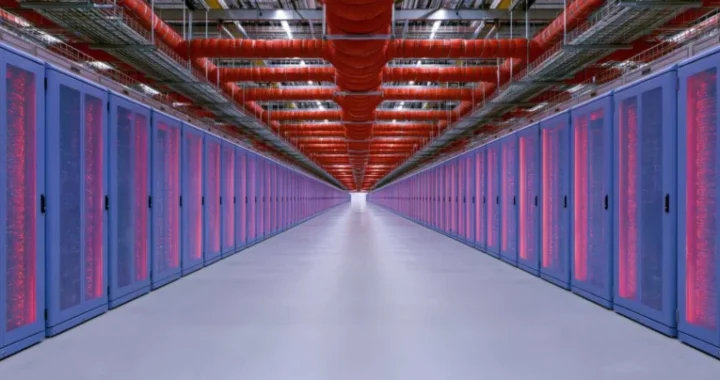







The rapid expansion of Artificial Intelligence (AI) is not merely an incremental shift in the technology sector; it is a fundamental transformation of the global industrial landscape. As demand for high-density compute power skyrockets, the data center industry is being forced to scale at a pace few sectors have ever witnessed. This hyper-growth has created a paradox: while the industry is tasked with building more infrastructure than ever before, the margin for error has effectively vanished. In this high-stakes environment, traditional quality management frameworks are beginning to show their age, prompting a major industry-wide push for a specialized, unified standard: the DCE 9000.
The State of Play: A System Under Pressure
The current trajectory of data center expansion is unprecedented. Driven by the voracious power and cooling requirements of Large Language Models (LLMs) and generative AI, hyperscalers and colocation providers are racing to deploy hardware that is more complex and interconnected than any prior generation of IT infrastructure.
However, this race to scale has exposed significant structural vulnerabilities. In a recent webinar hosted by the Telecommunications Industry Association (TIA), Mike Regan and Google’s Govind Ramu examined these systemic gaps. The core issue, they argued, is that the industry is relying on general-purpose quality management systems to govern mission-critical, bespoke environments.
The strain is visible across every link in the supply chain:
- Equipment Suppliers: Manufacturers are struggling to balance the demand for rapid production with the extreme precision required for high-performance AI hardware.
- Operators: Data center providers are under immense pressure to deploy capacity at record speeds without compromising the "five-nines" (99.999%) uptime that the digital economy demands.
- The Workforce: The rapid influx of new personnel, often entering environments where operational processes remain tribal or undocumented, creates a high risk of human error during installation and maintenance.
Chronology of a Crisis: From Generalization to Specialization
The evolution of data center quality management has followed a predictable, if now insufficient, path.
The Foundation: The ISO 9001 Era
For decades, ISO 9001 has served as the bedrock of quality management. Its focus on process consistency, documentation, and continuous improvement was sufficient when data centers were relatively static environments. It provided a common language for international business, ensuring that a server rack built in one region met the basic quality expectations of a buyer in another.
The Fragmentation Phase (2015–2023)
As the complexity of data centers grew—incorporating liquid cooling, advanced power management, and AI-optimized hardware—ISO 9001 began to fall short. It was intentionally designed to be broad enough to cover everything from coffee shops to aerospace manufacturing. Because it lacked the specificity required for data center infrastructure, major operators began creating their own proprietary audit frameworks and supplier requirements.
This led to the "Fragmentation Phase." Suppliers were suddenly subjected to an alphabet soup of unique, company-specific audit criteria. A single manufacturer might be required to undergo dozens of different audits to satisfy the disparate, yet functionally identical, requirements of various hyperscalers. This duplication of effort diverted billions of dollars away from research and development and into administrative compliance.
The Shift Toward Harmonization (2024–Present)
Recognizing that the status quo is unsustainable, industry leaders have pivoted toward a collaborative, unified approach. The introduction of the DCE 9000 (Data Center Excellence 9000) marks a turning point in this chronology, signaling the industry’s intent to move away from fragmented, company-siloed standards toward a sector-specific, certifiable framework.
Supporting Data: The Cost of Inconsistency
The necessity for a new framework is not purely theoretical; it is rooted in the economics of risk.
In a complex, interconnected AI data center, a single component failure—even one as seemingly trivial as a faulty power distribution unit (PDU) connector—can trigger a cascading failure that disrupts an entire cluster. According to industry analysts, the cost of downtime in a modern hyperscale data center can exceed $1 million per hour when factoring in lost revenue, contractual penalties, and the catastrophic loss of model training progress.
Current industry data highlights several key friction points:
- Redundant Audit Burden: Suppliers report that up to 30% of their quality assurance budget is spent on complying with redundant, overlapping audit requirements from different customers.
- Deployment Delays: Inconsistent documentation and quality requirements between vendors and operators are cited as a primary driver for delays in site commissioning.
- The "Quality Gap": Data indicates that over 40% of operational incidents in modern data centers can be traced back to "process gaps"—inconsistencies that arise during the handover between suppliers, builders, and operators.
Official Perspectives: Why DCE 9000 is the Answer
The TIA and industry advocates argue that the DCE 9000 is not meant to be another bureaucratic hurdle. Instead, it is designed as a "sector-specific extension" of existing ISO standards. By embedding data center-specific requirements—such as specialized testing protocols for power density and cooling efficiency—into a globally recognized structure, the industry can finally achieve "one audit, one standard, one result."
"The goal is to move beyond mere compliance," says the TIA initiative leadership. "When quality is treated as a constraint, it slows innovation. When it is treated as a shared, consistent framework, it becomes an enabler of scale."
By creating a common baseline, the industry can reduce the "hidden tax" of fragmented quality management. If a supplier is certified under DCE 9000, that certification should, in theory, satisfy the quality requirements of any major operator. This transparency allows for a more resilient supply chain where issues are identified at the source, rather than during the final, high-pressure commissioning phase.
Implications: The Future of AI Infrastructure
The move toward a unified quality standard carries profound implications for the future of the digital economy.
Resilience and Reliability
As AI models move from experimental phases into the backbone of global finance, healthcare, and logistics, the reliability of the underlying infrastructure becomes a matter of national security. A standardized, rigorous quality framework provides the necessary guardrails to ensure that infrastructure can handle the intensity of 24/7 AI workloads without buckling under the pressure of its own complexity.
Faster Time-to-Market
In the AI arms race, speed is the primary currency. By eliminating the friction of fragmented audits and inconsistent requirements, companies that adopt DCE 9000 will be able to deploy capacity significantly faster than those stuck in the old, siloed paradigm. This "industrialized" approach to data center quality will be the difference between firms that lead the AI era and those that remain perpetually stuck in the construction phase.
A Call to Action for the Ecosystem
The success of this transition is not guaranteed. It requires a concerted effort from all stakeholders. The TIA emphasizes that the framework is currently in an iterative, fast-paced development phase. Unlike traditional standards that take years to draft and update, the DCE 9000 is being built to evolve in near real-time, matching the speed of the AI sector itself.
For operators, builders, and suppliers, the message is clear: the era of fragmented quality is ending. Organizations that participate in the development and adoption of DCE 9000 are not just protecting their own interests—they are helping to define the operating system of the future.
To join this effort, industry participants are encouraged to engage with the TIA and contribute their expertise to the ongoing development of the DCE 9000. The question is no longer whether the industry will adopt a unified standard, but which organizations will lead the way in shaping the standards that will sustain the next generation of global compute.
For further information on the DCE 9000 initiative, visit the TIA Quality Data Center portal. To watch the full discussion on the shift in quality frameworks, view the webinar here. For inquiries regarding membership and active participation, contact [email protected].