







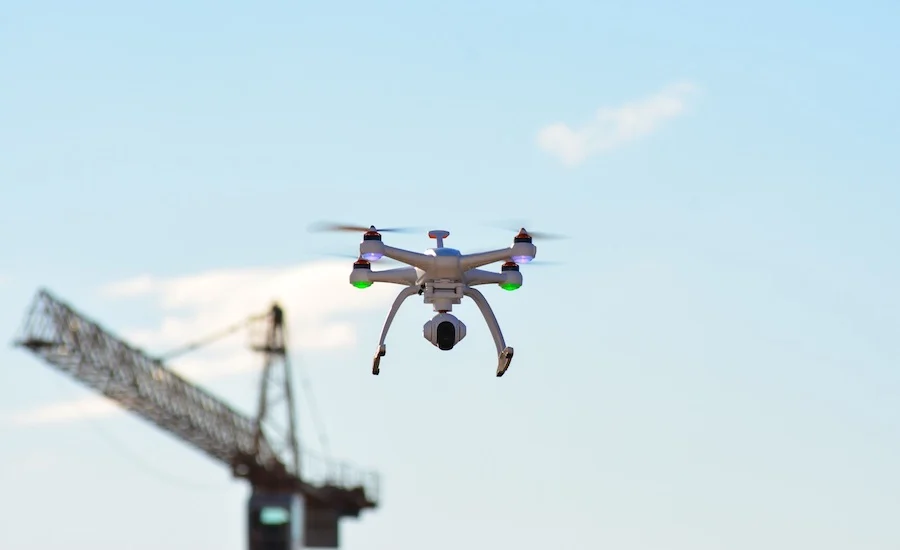
In a move that signals a seismic shift in the construction technology landscape, project management giant Procore Technologies announced on July 29 its intent to acquire DroneDeploy, the leading reality capture platform, in an all-cash transaction valued at $845 million. This acquisition represents more than a mere consolidation of market share; it is a strategic maneuver designed to fuse massive, disparate datasets into a singular, AI-driven engine capable of monitoring, analyzing, and ultimately managing the physical progression of global construction sites in real-time.
As the industry grapples with chronic productivity challenges and labor shortages, the integration of DroneDeploy’s aerial and ground-based visual intelligence into Procore’s project management ecosystem promises to move the needle from "passive documentation" to "automated action."
The Core Facts: A Strategic Consolidation
The agreement, which is expected to close later this year, brings together two of the most significant players in construction software. Procore, a publicly traded titan, has long served as the digital nervous system for construction projects, housing project management workflows, financial data, and communication logs. DroneDeploy, conversely, has mastered the art of capturing the "physical truth" of a jobsite.
By capturing high-resolution imagery and data from drones, 360-degree cameras, and ground-based sensors, DroneDeploy has effectively digitized the visual history of over 3 million jobsites. The merger aims to bridge the gap between what is recorded in a project’s administrative logs (the "paper" construction) and what is actually happening on the ground (the "physical" construction).
For Procore, this acquisition is a key component of a broader AI strategy. The company is betting that by owning both the project data and the visual reality of the build, it can deploy "digital coworkers"—AI agents that do not just store information but proactively flag discrepancies, safety hazards, and schedule slippages.
Chronology: From Niche Tools to Integrated Platforms
The path to this acquisition was paved by years of rapid innovation and previous M&A activity that reshaped the industry.
- The Rise of DroneDeploy: Founded with a focus on drone mapping, DroneDeploy spent a decade expanding its capabilities to include ground-based reality capture. This evolution reached a critical milestone in 2022 with the company’s acquisition of StructionSite, a move that solidified its position as an end-to-end reality capture platform.
- Procore’s Platform Expansion: Procore has consistently grown its reach through both internal development and strategic investments, moving beyond basic project management into financial management, safety, and field productivity.
- The July 29 Announcement: Following months of speculation regarding how construction tech giants would integrate advanced AI and computer vision, Procore confirmed the $845 million cash deal, marking one of the largest acquisitions in the history of the construction technology sector.
- The Roadmap Ahead: With the transaction expected to close in late 2024, the companies are currently focused on integration strategies. While regulatory reviews and closing conditions must be met, the leadership teams are already drafting plans to cross-sell DroneDeploy’s visual data capabilities to Procore’s extensive global customer base.
The Power of Data: Scale and Synergy
The true value of this deal lies in the sheer volume of data being unified. Procore and DroneDeploy possess two of the most comprehensive datasets in the built environment, and their combination creates a proprietary information moat that competitors will struggle to replicate.
Procore’s Data Footprint
Procore’s platform is a repository of unprecedented scale. According to the company, the past year alone has seen the generation of:
- Nearly 400 million photos: A massive visual log of project milestones.
- Over 126 million drawings: The blueprints that dictate the intent of the build.
- Over 10 million RFIs, submittals, and inspections: The collaborative threads that hold a project together.
DroneDeploy’s Visual Intelligence
DroneDeploy’s contribution is equally staggering, providing the physical evidence of execution. Their database includes:
- 20 trillion square feet of visual data mapped across the globe.
- Tens of millions of user-generated annotations that highlight specific issues or progress notes.
- More than 100,000 labeled safety issues, which serve as the foundation for training AI models to spot hazards automatically.
When these datasets are merged, the result is a high-fidelity "Digital Twin" ecosystem. An AI can now compare a blueprint (from Procore) against a 360-degree photo (from DroneDeploy) to identify if a wall was built in the wrong place or if a safety railing is missing—all without manual human intervention.

Official Perspectives: The Vision for "Digital Coworkers"
Leadership from both firms have framed the acquisition as a long-awaited alignment with customer needs.
Ajei Gopal, president and CEO of Procore, emphasized the shift toward intelligent automation in his statement: "Once the acquisition closes, we plan to immediately cross-sell DroneDeploy’s solutions into our broader customer base and vice versa. Adding DroneDeploy’s technology into the Procore platform will enable us to accelerate our AI strategy and deliver digital coworkers that track what’s happening on a project, make sense of it, and then take action to change the outcome."
Mike Winn, CEO of DroneDeploy, echoed this sentiment, highlighting the user demand for a seamless, "native" experience: "Over the last decade, our customers have consistently told us the same thing—they want reality capture to be a native part of how they work, not another tool bolted on. Joining Procore accelerates that mission. We remain committed to delivering the best ground and aerial reality capture solutions—deeply integrated into Procore to drive automated action."
Market Implications: What Happens Next?
While the promise of a unified platform is significant, the acquisition raises several questions for the broader construction tech ecosystem.
1. Integration vs. Open Ecosystems
Procore has long championed an open platform strategy, boasting an extensive marketplace of third-party integrations. However, as Procore brings powerful features "in-house," it creates a tension between providing a "best-in-class" native solution and maintaining a neutral ecosystem. Users who rely on competing reality capture platforms integrated into Procore are currently left wondering how the long-term support for these integrations will evolve. Neither company has yet provided a definitive roadmap regarding the future of DroneDeploy’s interoperability with Procore’s competitors.
2. The Future of AI in Construction
This deal accelerates the "AI arms race" in construction. By owning the data, Procore is positioning itself to be the primary provider of "reasoning" software in the industry. As the company moves toward "real-time perception" and "advanced reasoning," we can expect to see a new wave of predictive project management tools that identify risks before they result in costly delays or litigation.
3. Industry Adoption and Barriers
While the technology is advanced, the primary challenge remains adoption. Construction is a notoriously fragmented industry with varying levels of digital maturity. Success for this acquisition will depend on how easily Procore can lower the barrier to entry for the average site superintendent to start using advanced aerial and ground-based reality capture. If the integration is too complex, the massive potential of the dataset will remain underutilized.
Conclusion: A New Era of Construction Intelligence
The $845 million acquisition of DroneDeploy by Procore is a defining moment for the industry. It marks the transition of construction technology from a series of disconnected, record-keeping tools to a cohesive, intelligent platform that can "see" and "think" about the construction site.
As Goldman Sachs advises Procore and Citi advises DroneDeploy on the finalization of the deal, the industry is watching closely. For contractors, owners, and engineers, the promise is clear: a future where the gap between the plan and the reality of a project is closed by the power of AI, leading to safer, faster, and more efficient builds. Whether this results in a closed, proprietary loop or a new standard for open, integrated intelligence remains the industry’s next great debate. For now, the message is unequivocal: the digitization of the construction site has moved beyond documentation and into the era of automated intelligence.